In the beginning of class today we discussed what we did yesterday very briefly. Our main focus was that the United States’ motive for imperialism was that we saw an opportunity to make money. Due to imperialism, the boundaries of the U.S. stretched from the east coast and Puerto Rico all the way to the Philippines. Since the Caribbean and the Philippines were very far apart, with Mexico and South America between them, it often took a while to travel between the two places because you would have to go around South America. The U.S. then thought of making a canal in Panama to make traveling easier. The U.S. went to Panama to ask if they could buy the land in order to make the canal, but Panama told the U.S. you need to ask Columbia for the land because Columbia at the time controlled Panama. The U.S then went to Columbia to get permission for building the canal, but they said no. We then made a very smart move by telling Panama if they rebel against Columbia, the U.S. would be there to back them up. Sure enough Panama revolted, and we helped get there independence. We then paid Columbia 25 million dollars for the land to build the canal on for the same reason we paid Mexico for California and New Mexico, so we don’t seem like the enemy. Next we discussed how Teddy Roosevelt added to the Monroe Doctrine. It basically stated that we have the right to be the police force in any of our foreign territories. To back this statement up with proof, Teddy Roosevelt allowed the U.S. navy to go on a tour of the world to show off our ships. By 1905, the U.S. had become a huge world force.
After reviewing yesterday’s lesson, Ms.Separ explained the adventures she went on trying to find the right vanity for her husband to go in their down stairs bathroom. Ms.Separ is also thrilled to go home today and search for the supposed leak in the wall with her hard hat and head light. Good luck Ms.Separ. After Ms.Separ’s story we reviewed the dynasties in China.
1. Xia
2. Shang- 1st dynasty to monopolize bronze production.
3. Zhou- 1st to use the mandate of heaven.
4. Qin- Legalist dynasty with the ruler of Shi Huangdi.
5. Han- Around the same time as Rome and traded silk and paper.
6. Sui- Legalist dynasty and lasts for 30 years.
7. Tang- Merit system.
8. Song- Cosmopolitan era and more advanced than Europe.
9. Yuan(Mongols)
10. Ming- Exploration then progressed to isolation.
11. Qing(1644-1911)
*During the Han, Tang and Song there was a golden age.
The last thing we discussed in class today was the Qing dynasty which is in the reading due tomorrow. The Qing dynasty started out politically stable, had fair laws, reinstituted the merit system and increased in agriculture production. An important thing to remember is that trade between the Americas and the Qing dynasty was still happening, however, the Qing remained isolated as to who they allowed in their country. A big problem with this dynasty is that they were so obsessed with political stability that they neglected economic growth and technological growth. They were also very ethnocentric so they didn’t take any advice or ideas from other countries.
Remember that the outline for part A) under Civilizations in Crisis on the textbook worksheet is due tomorrow. I hope this summed up everything that was discussed in class today. The next person to blog is Aaron (You lucked out Alex C.).
Thursday, February 25, 2010

Wednesday, February 24, 2010
Dan Ma said 2/24
In class today, we started going into a new topic, which was the United State’s role on Imperialism. Before starting, Mrs. Separ had handed back our DBQs we had written before break. In 1796, President George Washington had wanted America to stay out of foreign affairs or in other words was trying to tell the United States to become isolated. This meant that the U.S. had to remain neutral in world affairs and should not be involved in European conflicts. After many years, the time of U.S. isolation had to end due to the rise of industrialization. With the beginning of mass production and the new demand for resources, the need to trade with other countries could not be ignored any longer.
Moving down on our worksheet, we now come across the Monroe Doctrine where we reviewed how the United States closed off the west to further colonization by any other countries especially the Europeans. This policy also said that the U.S. had to stay out of foreign affairs. At this time, the Untied States was not as strong as we would be in later years and had no real power to back up their policy but we knew that Great Britain would help us. Next up was the Manifest Destiny in 1845. It said that it was the United State’s divine mission to expand west. Since the Untied States only occupied the east coast at this time, they had plenty of land to the west to take. The only problem was that other countries owned these lands and had people living on it such as people of Mexico living in areas around what is today California. This desire for land led to a war with Mexico where we were able to win California and New Mexico. To ease Mexico’s anger for losing valuable land, the United States paid them 15 million dollars.
After taking all the land they could up to the west coast, the Untied States began to look toward overseas expansion in the Pacific Ocean. Beginning in the 1890’s, there were many motives for overseas imperialism. Just to name a few there was the need to find new markets to trade, spread of democracy, and the creation of jobs. The major difference between European and American imperialism was that Europeans wanted political gain while we wanted economic gains. Hawaii was a great example of this because the United States was able to see all the great economic opportunities from starting businesses in Hawaii. In 1898, United States even annexes Hawaii, which is to take over. During the same year, The United States goes to war with Spain after blaming the Spanish for blowing up one of their ships that they didn’t really do but the Americans had wanted to fight Spain for a long time. This was only the spark that ignited the war because The United States were not involved and it was the Spanish colony of Cuba rebelling against Spain at first. After defeating Spain, the U.S. gains the Philippine islands, Puerto Rico, and Guam but not Cuba. The reason for this is because they wanted to keep their profiting businesses and companies on Cuba. The Philippines are not happy with them being controlled by the U.S. after just gaining independence from Spain so they fight and rebel again us. With all these colonies and islands, the U.S. needed a shorter route between the Atlantic and Pacific Oceans. With the leadership of Teddy Roosevelt, we get Panama to successfully rebel against Colombia with our help and therefore given the O.K to build the Panama canal. Again the U.S. pays Colombia 25 million to wipe their tears with.
I tried to keep the blog short and to the point but that was not possible with all the information we learned today. There is supposed to be a blog quiz so don’t leave your computer just yet. Next blogger is Elan because he asked first >:o!
Quiz: Create a change over time timesline of American Imperialism. Hand in tomorrow in class. Separ
Moving down on our worksheet, we now come across the Monroe Doctrine where we reviewed how the United States closed off the west to further colonization by any other countries especially the Europeans. This policy also said that the U.S. had to stay out of foreign affairs. At this time, the Untied States was not as strong as we would be in later years and had no real power to back up their policy but we knew that Great Britain would help us. Next up was the Manifest Destiny in 1845. It said that it was the United State’s divine mission to expand west. Since the Untied States only occupied the east coast at this time, they had plenty of land to the west to take. The only problem was that other countries owned these lands and had people living on it such as people of Mexico living in areas around what is today California. This desire for land led to a war with Mexico where we were able to win California and New Mexico. To ease Mexico’s anger for losing valuable land, the United States paid them 15 million dollars.
After taking all the land they could up to the west coast, the Untied States began to look toward overseas expansion in the Pacific Ocean. Beginning in the 1890’s, there were many motives for overseas imperialism. Just to name a few there was the need to find new markets to trade, spread of democracy, and the creation of jobs. The major difference between European and American imperialism was that Europeans wanted political gain while we wanted economic gains. Hawaii was a great example of this because the United States was able to see all the great economic opportunities from starting businesses in Hawaii. In 1898, United States even annexes Hawaii, which is to take over. During the same year, The United States goes to war with Spain after blaming the Spanish for blowing up one of their ships that they didn’t really do but the Americans had wanted to fight Spain for a long time. This was only the spark that ignited the war because The United States were not involved and it was the Spanish colony of Cuba rebelling against Spain at first. After defeating Spain, the U.S. gains the Philippine islands, Puerto Rico, and Guam but not Cuba. The reason for this is because they wanted to keep their profiting businesses and companies on Cuba. The Philippines are not happy with them being controlled by the U.S. after just gaining independence from Spain so they fight and rebel again us. With all these colonies and islands, the U.S. needed a shorter route between the Atlantic and Pacific Oceans. With the leadership of Teddy Roosevelt, we get Panama to successfully rebel against Colombia with our help and therefore given the O.K to build the Panama canal. Again the U.S. pays Colombia 25 million to wipe their tears with.
I tried to keep the blog short and to the point but that was not possible with all the information we learned today. There is supposed to be a blog quiz so don’t leave your computer just yet. Next blogger is Elan because he asked first >:o!
Quiz: Create a change over time timesline of American Imperialism. Hand in tomorrow in class. Separ
Tuesday, February 23, 2010
Sam Said 2/23
Today in class, we were given back our graded Comparative essays on the Neolithic and Industrial Revolution. Ms. Separ advised us to use ‘comparative words’ to help with the flow of our writing, along with making it clear what we are comparing. (Both, as well as..)
We discussed time before the British power in India. We looked at a painting of the Mughal leader Shah Jahan sitting on a “peacock throne”; he was son of Akbar the Great. Another leader, Aurangzeb ended religious toleration in India, after began the slow
decline of the Mughals in 1707. It’s important to remember that India is mostly Hindu.
After, we started with a worksheet for notes titled “The British in India”. The BEIC, acronym for the British East India Company, was one of the main factors that helped British power increase in India. It was a joint-stock corporation, controlled by people who invested and owned stocks.
In India, Sepoys were Indian soldiers who worked for the British army. The Sepoy Mutiny (Mutiny = uprising, rebellion, etc.) in 1858. This was due to the British not telling the Sepoys, who are strictly Hindu or Muslim, that the gun cartridges they were using were sealed by cow fat. (The cartridges had to be opened by biting off the seal; Hindus and Muslims consider the cow a sacred animal and do not eat them.) The Sepoy army became infuriated once the British did not care they were against the animal fat, so the British seemed to not respect their country/religion.
The rebellion lasted for six months, and wound up failing. The main result being that the British took direct rule of India. (India is ruled by British officials.)
Another sheet we worked on had the benefits and disadvantages to British rule in India, my half of the class worked on benefits. Some of the benefits were: the charitable aid in famine, education available for males and females, resurrection of Indian literature, Peace, order, and freedom of speech, development of new valuable products and increase of exports and introduction of telegraphs.
The next post will be from Dan Ma. :P
We discussed time before the British power in India. We looked at a painting of the Mughal leader Shah Jahan sitting on a “peacock throne”; he was son of Akbar the Great. Another leader, Aurangzeb ended religious toleration in India, after began the slow
decline of the Mughals in 1707. It’s important to remember that India is mostly Hindu.
After, we started with a worksheet for notes titled “The British in India”. The BEIC, acronym for the British East India Company, was one of the main factors that helped British power increase in India. It was a joint-stock corporation, controlled by people who invested and owned stocks.
In India, Sepoys were Indian soldiers who worked for the British army. The Sepoy Mutiny (Mutiny = uprising, rebellion, etc.) in 1858. This was due to the British not telling the Sepoys, who are strictly Hindu or Muslim, that the gun cartridges they were using were sealed by cow fat. (The cartridges had to be opened by biting off the seal; Hindus and Muslims consider the cow a sacred animal and do not eat them.) The Sepoy army became infuriated once the British did not care they were against the animal fat, so the British seemed to not respect their country/religion.
The rebellion lasted for six months, and wound up failing. The main result being that the British took direct rule of India. (India is ruled by British officials.)
Another sheet we worked on had the benefits and disadvantages to British rule in India, my half of the class worked on benefits. Some of the benefits were: the charitable aid in famine, education available for males and females, resurrection of Indian literature, Peace, order, and freedom of speech, development of new valuable products and increase of exports and introduction of telegraphs.
The next post will be from Dan Ma. :P
Wednesday, February 10, 2010
Nick said...2/8
Monday in class we went over imperialism and colonizaton in new lands. specificaly africa. First off we discused motives for imperializing: 1) need for recources 2) need for new consumer markets 3) because of the balance of power, european nations needed a way to establish dominance over each other, by creating imperial empires outside of europe 4) establish naval bases 5) social darwinism 6)white mans burden, a racist concept of "civilizing" anyone different 7) spread christianity. How do you like that run on sentance. By the late 19th century, people where starting to figure out that central africa was in fact inhabitable. European powers started to claim land, without any standard identification for the land. This led to general whosawokamadingooo-ness and confusion. in 1884, Bismarck called a meeting beetween 14 european nations and the us. NO africans where presant. The purpose was to discuss the rules for the colonizing/imperializing of Africa, especialy concerning land claiming. Rules called effective occupation where established. if you claim land, you must leave behind settlers, plant a flag, and draw boundries. this led to the scramble for Africa, and most of the continent was divied up.
Please remember that the European nations did not ask the Africans for input on the division of their countries. This is going to cause many problems for the Africans.
Mrs. separ, make shue mike shovels thuroghly, nobody eat the yellow snow, elener, due to the unavoidable inclamite weather, our hang glide adventure is unfortunatly postsponed. the next bloger will be sam, because her boyfreind is so devilishly attractive. (i heart Kevin Paith)
Readings on technology are due tomorrow. Essay is on FRIDAY NO MATTER WHAT HAPPENS WITH THE WEATHER
Please remember that the European nations did not ask the Africans for input on the division of their countries. This is going to cause many problems for the Africans.
Mrs. separ, make shue mike shovels thuroghly, nobody eat the yellow snow, elener, due to the unavoidable inclamite weather, our hang glide adventure is unfortunatly postsponed. the next bloger will be sam, because her boyfreind is so devilishly attractive. (i heart Kevin Paith)
Readings on technology are due tomorrow. Essay is on FRIDAY NO MATTER WHAT HAPPENS WITH THE WEATHER
Thursday, February 4, 2010
Rachel 2/4....
Today we went over a DBQ concerning the positive and negative effects of imperialism.
The first document was by O.P. Austin from The Forum, 1900 called "Does Colonization Pay". This document discussed how the progressive "mother" nations desire land in the tropics, including Africa, Latin America and Asia. Under their control, they'll be able to obtain needed foodstuffs and manufactured goods back to their country. In return, they provide the other country with roads, canals, railways, telegraphs, schools and newspaper. All while this occurs, the mother country is influencing their culture.
The second document is a cartoon with the caption "Learning civilized way is hard work" In the picture, two men, one African and one Asian man are pulling a carriage where a white colonist is sitting and relaxing. This showed how the natives of these conquered lands had to endure hard labor and harsh treatment from the colonists. However, it only benefitted the progressive nation, and not their own.
Document three, taken from Imperialism and World Politics from Parker T. Moore in 1926, he explains that during this time, the most power rested within the hands of the makers of cotton, iron and other goods, banks, military and naval leaders, and missionaries. For the cotton and iron makers, they had control of the colonial markets, in hopes of obtaining political control in the long run. The bankers made loans to the colonies, as well as plantation owners and importers/exporters and helped pay for the building f steamship lines and railroads. The military generals enforced expanding the white man's rule over an "inferior race" of other-skin colored natives. Along with this, missionaries spoke to natives about "their world" implying the more advanced and industrialized ways of Europe.
An African proverb is seen in document four which reads "When the whites came to our country, we had the land and they had the Bible, now we have the Bible and they have the land. Clearly from the African prospective, this statement explains that they didn't like how these colonists came to their land with missionaries to influence their religion and culture. They were satisfied with their religion and while this was all occurring, the white men took their land and resources from them.
Document five is a poem, also from the African prospective. A young black boy, who was a slave, discusses how his life has changed ever since the Europeans came to their land. Overall, the treatment of the natives was extremely harsh. His father was killed, his mom seduced (or raped) and his brother spent so much time outside in the sun doing work that his body was beginning to burnt. And all while this occurred, the boy could not protest in fear of harm or his life, and had to cope with being an innocent bystander. During this time, the Europeans weren't concerned with the Africans...only with obtaining their resources and making money.
Sekou Toure, a West African nationalist said an important quote/speech in 1962(Document 6), concerning Imperialism (obviously). He understands the Europeans motives for colonization, but he doesn't completely agree with the outcome it has produced. He know the African land is valuable for its abundance of it's raw materials and resources, and it's sources of power, but he is displeased that the colonists came to their land and don't allow them to govern it themselves. He also knows the Europeans see them as inferior because of how badly they treat them and because they feel they are not capable of running their nation themselves because they aren't advanced enough. Toure feels that the Europeans trying to "better" the African nation is pretty much a lame excuse. Also, he is unhappy that all of this industrialization and trade occurs yet barely any of it benefits Africa, and all of it goes to Europe.
Document 7 is a German cartoon titled "This is How the English Colonize". The picture displays colonists running a machine where a native is being tortured, yet the "outcome" of the machine is helping the colonists. While this is all occurring, there is a religious figure standing beside them reading the bible. This document id displaying how the Europeans constantly used religion as a justification for their actions. Although they claimed to want to spread Christianity,which they did in fact do, their main priority was to do whatever it took to help their economy.
I group these documents based on positive and negative effects of European imperialism and saw one and three as postive, and two, four, five, six, and seven as negative. I just can't wait to write this essay...
Next to post is Nick...
The first document was by O.P. Austin from The Forum, 1900 called "Does Colonization Pay". This document discussed how the progressive "mother" nations desire land in the tropics, including Africa, Latin America and Asia. Under their control, they'll be able to obtain needed foodstuffs and manufactured goods back to their country. In return, they provide the other country with roads, canals, railways, telegraphs, schools and newspaper. All while this occurs, the mother country is influencing their culture.
The second document is a cartoon with the caption "Learning civilized way is hard work" In the picture, two men, one African and one Asian man are pulling a carriage where a white colonist is sitting and relaxing. This showed how the natives of these conquered lands had to endure hard labor and harsh treatment from the colonists. However, it only benefitted the progressive nation, and not their own.
Document three, taken from Imperialism and World Politics from Parker T. Moore in 1926, he explains that during this time, the most power rested within the hands of the makers of cotton, iron and other goods, banks, military and naval leaders, and missionaries. For the cotton and iron makers, they had control of the colonial markets, in hopes of obtaining political control in the long run. The bankers made loans to the colonies, as well as plantation owners and importers/exporters and helped pay for the building f steamship lines and railroads. The military generals enforced expanding the white man's rule over an "inferior race" of other-skin colored natives. Along with this, missionaries spoke to natives about "their world" implying the more advanced and industrialized ways of Europe.
An African proverb is seen in document four which reads "When the whites came to our country, we had the land and they had the Bible, now we have the Bible and they have the land. Clearly from the African prospective, this statement explains that they didn't like how these colonists came to their land with missionaries to influence their religion and culture. They were satisfied with their religion and while this was all occurring, the white men took their land and resources from them.
Document five is a poem, also from the African prospective. A young black boy, who was a slave, discusses how his life has changed ever since the Europeans came to their land. Overall, the treatment of the natives was extremely harsh. His father was killed, his mom seduced (or raped) and his brother spent so much time outside in the sun doing work that his body was beginning to burnt. And all while this occurred, the boy could not protest in fear of harm or his life, and had to cope with being an innocent bystander. During this time, the Europeans weren't concerned with the Africans...only with obtaining their resources and making money.
Sekou Toure, a West African nationalist said an important quote/speech in 1962(Document 6), concerning Imperialism (obviously). He understands the Europeans motives for colonization, but he doesn't completely agree with the outcome it has produced. He know the African land is valuable for its abundance of it's raw materials and resources, and it's sources of power, but he is displeased that the colonists came to their land and don't allow them to govern it themselves. He also knows the Europeans see them as inferior because of how badly they treat them and because they feel they are not capable of running their nation themselves because they aren't advanced enough. Toure feels that the Europeans trying to "better" the African nation is pretty much a lame excuse. Also, he is unhappy that all of this industrialization and trade occurs yet barely any of it benefits Africa, and all of it goes to Europe.
Document 7 is a German cartoon titled "This is How the English Colonize". The picture displays colonists running a machine where a native is being tortured, yet the "outcome" of the machine is helping the colonists. While this is all occurring, there is a religious figure standing beside them reading the bible. This document id displaying how the Europeans constantly used religion as a justification for their actions. Although they claimed to want to spread Christianity,which they did in fact do, their main priority was to do whatever it took to help their economy.
I group these documents based on positive and negative effects of European imperialism and saw one and three as postive, and two, four, five, six, and seven as negative. I just can't wait to write this essay...
Next to post is Nick...
Wednesday, February 3, 2010
Michelle wrote...2/3
In class today we had a substitute. We began to go over what happened in Europe after the Congress of Vienna in 1815. As we learned already, the congress had decided to restore the kings back to power. In 1848 uprisings begin to erupt in Europe. Many people were unhappy with these rulers and desired a change. By 1878, new countries and boundaries were created. Some new countries that were formed are Romania, Italy, Austria-Hungry, Serbia, Montenegro, and the German Empire was enlarged.
We then examined maps of Europe and answered questions based off of them. We learned that people in Europe protested corrupt governments, poor working conditions, foreign rule, and other issues. None of these protests were successful.
In 1861, most Italian states are able to unite and form Italy. Proceeding in 1867, the Austrian empire splits to form Austrian and Hungarian kingdoms sharing one ruler. In 1871, the German states unite to form the German empire, and France loses two eastern provinces to Germany. Nationalism played a great role in causing changes to Europe. In some places it united countries, while in other places it divided them.
Lastly we got a worksheet that compares the unification of Italy to the Unification of Germany. Both unifications contained large amounts of nationalism. Also, prior to the Italian and German unifications both governments were fragmented groups of small kingdoms. The people of Italy shared the same language, culture, and background. The overall goal in Italy was to unify into a sovereign nation state with an autonomous rule. The most famous nationalistic leaders were Count Camilo Cavour, Guiseppe Garibaldi, and Guiseppe Mazzini. Mazzini was the soul of Italian nationalism. He established a secret society known as Young Italy, which was an organization devoted to uniting Italy. Garibaldi was the sword of nationalism. His band of redshirts was able to conquer forces that opposed unification. Cavour was the “brain” in his skilled diplomat. He was able to get help from France to defeat Austrians, which eventually put Victor Emmanuel II to power who completely united Italy in 1861. Germany, also following nationalistic movements, was to have an autonomous rule. In Germany, Prussia was the most dominant state, and dominated other smaller states. Kaiser Wilhelm ruled Prussia but the person who held the highest power was the Prime Minister Otto Bismarck. Bismarck united Germany through the Realpolitik policy, or realistic politics. Bismarck also was a strong supporter of Blood and Iron. Blood represents the sacrifices made through the culture of militarism while iron represented the need to industrialize. German power that was achieved through nationalism would support a period of imperialism. This would support the outbreak of World War I.
Well done! Please check my blog now! Separ
The homework will be posted on the blog tonight. The next person to blog will be Rachel.
We then examined maps of Europe and answered questions based off of them. We learned that people in Europe protested corrupt governments, poor working conditions, foreign rule, and other issues. None of these protests were successful.
In 1861, most Italian states are able to unite and form Italy. Proceeding in 1867, the Austrian empire splits to form Austrian and Hungarian kingdoms sharing one ruler. In 1871, the German states unite to form the German empire, and France loses two eastern provinces to Germany. Nationalism played a great role in causing changes to Europe. In some places it united countries, while in other places it divided them.
Lastly we got a worksheet that compares the unification of Italy to the Unification of Germany. Both unifications contained large amounts of nationalism. Also, prior to the Italian and German unifications both governments were fragmented groups of small kingdoms. The people of Italy shared the same language, culture, and background. The overall goal in Italy was to unify into a sovereign nation state with an autonomous rule. The most famous nationalistic leaders were Count Camilo Cavour, Guiseppe Garibaldi, and Guiseppe Mazzini. Mazzini was the soul of Italian nationalism. He established a secret society known as Young Italy, which was an organization devoted to uniting Italy. Garibaldi was the sword of nationalism. His band of redshirts was able to conquer forces that opposed unification. Cavour was the “brain” in his skilled diplomat. He was able to get help from France to defeat Austrians, which eventually put Victor Emmanuel II to power who completely united Italy in 1861. Germany, also following nationalistic movements, was to have an autonomous rule. In Germany, Prussia was the most dominant state, and dominated other smaller states. Kaiser Wilhelm ruled Prussia but the person who held the highest power was the Prime Minister Otto Bismarck. Bismarck united Germany through the Realpolitik policy, or realistic politics. Bismarck also was a strong supporter of Blood and Iron. Blood represents the sacrifices made through the culture of militarism while iron represented the need to industrialize. German power that was achieved through nationalism would support a period of imperialism. This would support the outbreak of World War I.
Well done! Please check my blog now! Separ
The homework will be posted on the blog tonight. The next person to blog will be Rachel.
Separ 2/3...
Hello Everyone. I went to the doctor today and although, I am getting better, he wants me to continue to take it easy. So I guess we will give it one more day and see how I feel. I am going CRAZY not being able to do much, luckily I have my 9H midterms to keep me busy.
So today you took a little break from imperialism and looked at Italian and German unification. What you need to understand about these events is that both Italy and Germany were a bunch of small, independent states, who will in the late 1800s, become unified under one leader. We will briefly go over this when I get back but for homework, which is due FRIDAY, February 5th via email....
USING VERY DETAILED INFORMATION DEFINE/IDENTIFY the following:
1. Cavour
2. Mazzini
3. Garabaldi
4. Bismarck
So today you took a little break from imperialism and looked at Italian and German unification. What you need to understand about these events is that both Italy and Germany were a bunch of small, independent states, who will in the late 1800s, become unified under one leader. We will briefly go over this when I get back but for homework, which is due FRIDAY, February 5th via email....
USING VERY DETAILED INFORMATION DEFINE/IDENTIFY the following:
1. Cavour
2. Mazzini
3. Garabaldi
4. Bismarck
Tuesday, February 2, 2010
Dylan wrote 2/2...
Today in class we were given a ditto to work on that had two documents on it. One of these documents was called The White Man's Burden and was written in 1899 by Rudyard Kipling. It tells of how it is the white European's job to impose their ideas, beliefs and culture upon the natives of the Philippines. Even though they find it a burden, they believe it will end famine and produce peace in the colony. The other document is entitled The Black Man's Burden which was written in 1903 by Edward Morel. Morel is a British journalist in the Belgian Congo and he writes about the abuses of imperialism. He believes it is the black man's burden to deal with the whites. Ten problems that Morel sees with imperialism are:
1.Africans are being killed in mass amounts
2.Diseases such as measles, smallpox and syphilis are being imported into native lands
3.Capitalism in being exploited
4.Destruction of African family life, occupation, and natural pursuits
5.Men are being enslaved
6.Man is incapable of reacting against unnatural conditions
7.Europeans impose hard labor which hurts and kills men
8.Child bearing becomes more difficult
9.Africans endure physical abuse
10.It ruins mental development
Tomorrow homework #4 is due and everyone should be checking the blog definately after 7 everyday to get work from Mrs.Separ.
Next blogger is Michelle. Dylan forgot to pick someone :=)
1.Africans are being killed in mass amounts
2.Diseases such as measles, smallpox and syphilis are being imported into native lands
3.Capitalism in being exploited
4.Destruction of African family life, occupation, and natural pursuits
5.Men are being enslaved
6.Man is incapable of reacting against unnatural conditions
7.Europeans impose hard labor which hurts and kills men
8.Child bearing becomes more difficult
9.Africans endure physical abuse
10.It ruins mental development
Tomorrow homework #4 is due and everyone should be checking the blog definately after 7 everyday to get work from Mrs.Separ.
Next blogger is Michelle. Dylan forgot to pick someone :=)
Separ's post 2/2...
Happy Groundhog's Day. Did he see his shadow? Thanks to all that wished me a speedy recovery. Ok, let's get down to business. I am still out sick and hopefully will be back by the end of the week, I go back to the doctor tomorrow. Anyway, I received most of your homeworks BUT there were some of you, SEVEN to be exact that did not do it. NOT GOOD PEOPLE!!!! Please remember that the person who is posting does not have to post until 7pm, sometimes they post earlier. I will post right after they do.
Today you examined two very opposing viewpoints about imperialism. Your homework tonight is to create a conversation between the two authors that debate the need for imperialism. Who's burden is it anyway? Email me your conversation, it should be in dialogue form.
esepar@bellmore-merrick.k12.ny.us
Today you examined two very opposing viewpoints about imperialism. Your homework tonight is to create a conversation between the two authors that debate the need for imperialism. Who's burden is it anyway? Email me your conversation, it should be in dialogue form.
esepar@bellmore-merrick.k12.ny.us
Monday, February 1, 2010
Elana said...2/1
Today we had a substitute and worked on a ditto. The ditto was all about imperialism and was written by a British Missionary urging the annexation of the South Sea Islands in 1883. New Hebrides was a group of islands that Britain wanted to take over. They liked it for the following reason. Shows some of the motives for imperialism. What is imperialism again?
It was in a good location: connecting Fiji to New Guinea. Why is this important?
The people living there wanted to be taken over by the British would provide excellent protection, and they feared a brutal takeover by the French. Competition between the nations.
Britain is funding New Hebrides with men and money to civilize and Christianize them. It would be stupid to waist all of that money by letting someone else take over New Hebrides and get all the credit for the Britain’s work.
New Hebrides is already dependent on Britain: all their imports and exports involve Britain. new markets
They have excellent resources in New Hebrides: rich soil, sugar cane, corn, cotton, coffee, arrowroot, spices, etc.
If someone else took them over it would be a threat for Britain because of their location. It would be dangerous for Britain to travel in the South Seas and it would also be dangerous for Britain’s colonies in that area.
Many British missionaries have converted the people of New Hebrides to Christianity. If someone else took them over all the work of the British would be lost.
It would overall be beneficial for Britain to control the islands of New Hebrides.
How does industrialization lead to imperialism?
We had to answer the two questions on the bottom of the page about this ditto. If you didn’t already, textbook assignment #4 is due no later than Wednesday. Tonight’s homework is going to be posted by Mrs. Separ on the blog.
The next person to blog is Dylan
It was in a good location: connecting Fiji to New Guinea. Why is this important?
The people living there wanted to be taken over by the British would provide excellent protection, and they feared a brutal takeover by the French. Competition between the nations.
Britain is funding New Hebrides with men and money to civilize and Christianize them. It would be stupid to waist all of that money by letting someone else take over New Hebrides and get all the credit for the Britain’s work.
New Hebrides is already dependent on Britain: all their imports and exports involve Britain. new markets
They have excellent resources in New Hebrides: rich soil, sugar cane, corn, cotton, coffee, arrowroot, spices, etc.
If someone else took them over it would be a threat for Britain because of their location. It would be dangerous for Britain to travel in the South Seas and it would also be dangerous for Britain’s colonies in that area.
Many British missionaries have converted the people of New Hebrides to Christianity. If someone else took them over all the work of the British would be lost.
It would overall be beneficial for Britain to control the islands of New Hebrides.
How does industrialization lead to imperialism?
We had to answer the two questions on the bottom of the page about this ditto. If you didn’t already, textbook assignment #4 is due no later than Wednesday. Tonight’s homework is going to be posted by Mrs. Separ on the blog.
The next person to blog is Dylan
Feb 1st...Separ's post
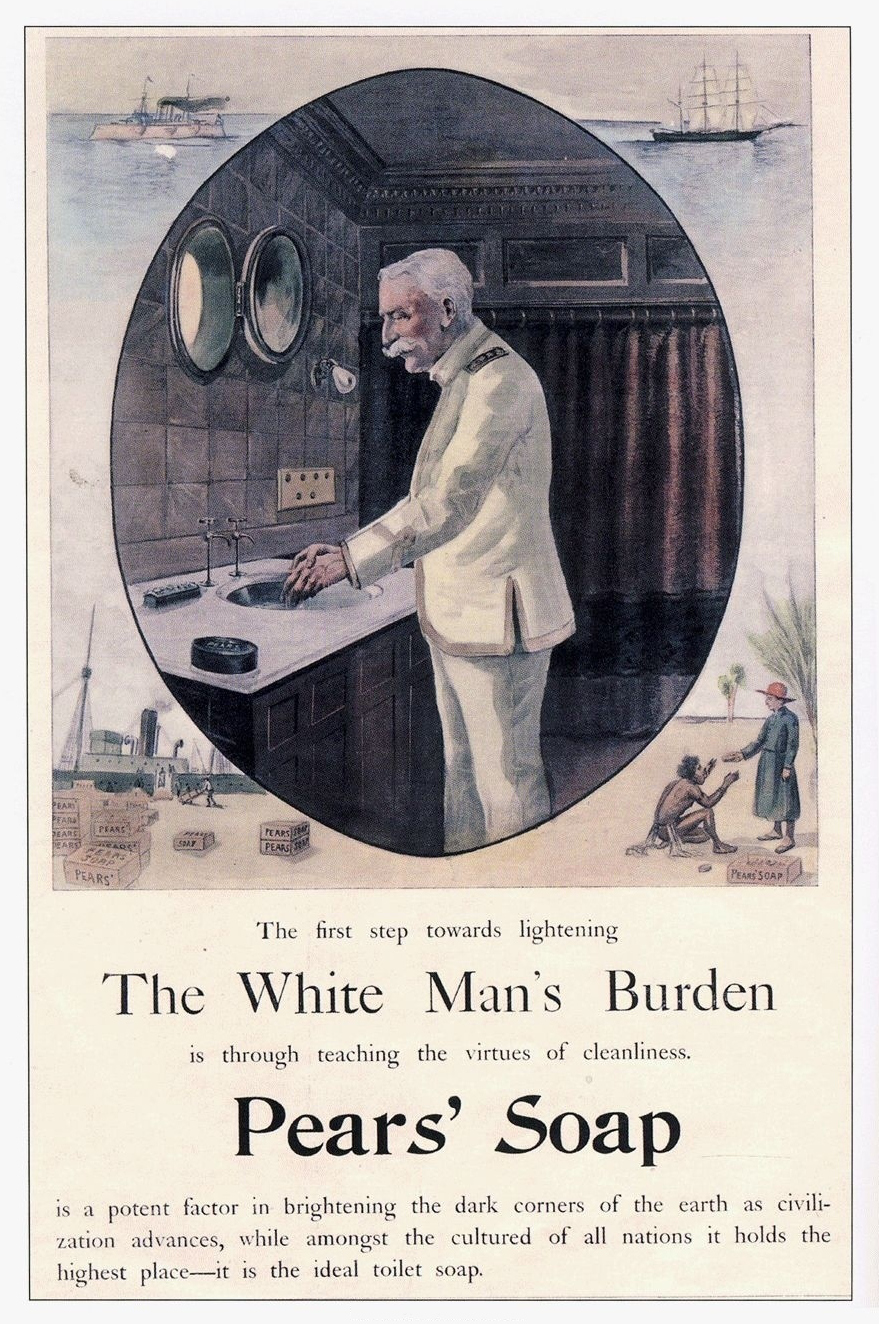
Hi everyone,
I am home sick and more than likely will be home for awhile. I had a terrible stomach virus over the weekend and somehow it has settled into my lungs, causing a terrible cough. Since I am pregnant, no meds, just rest and recovery---AWESOME.
That being said WE CAN NOT LOSE ground in our curriculum. Today you started my favorite topic--IMPERIALISM. Today, you read about the motives for imperialism and I SURE hope you were more specific than just stating economic, social, and political. You should have identified the need for natural resources, new markets, and the desire to spread Christianity, to name a few.
Take a look at the 1899 advertisement for Pear soap. Examine the picture and answer the foll- owing question. YOU MUST EMAIL ME YOUR ANSWER BY MIDNIGHT! My email is esepar@bellmore-merrick.k12.ny.us This is a homework assignment worth 15 pts.
How does this advertisement support the idea of imperialism? Look at the writing and the corner pictures for clues.
Don't forget to read Elana's post as well. Check the blog every day this week!
Subscribe to:
Comments (Atom)