In class today, Mrs. Separ wasn't here so we had a substitute, ol' demby poo. Mrs. Separ gave us alot of work today. One piece of work was the packet she gave us with the 3 documents on it and we had to answer the questions that followed. One of the documents was the sinking of The U.S. Passenger ship The Lusitania. The Lusitania was sunk by one of the German U-Boats, this was after the Germans sent out a warning to the U.S. about official submarine warfare that they will be initiating. The document after was the actual document that warned the U.S. about the warfare. The last document was the Treaty of Brest- Litovsk. This treaty was a bunch of articles talking about why Russia surrendered the war early which was because of their economic issues and their internal rebellions. Sorry this is such a short blog but there wasn't much going on in class today. HW #2 is due tomorrow and the next blogger will be ol' Dylan Ratner
Actually, there was A LOT more to the documents then this blog explains. For example, the Luistiana WAS NOT a US ship it was a British ship. So why did the US care? Also, the second document described the Zimmerman telegram. Who was this from? Who was it to? Why did the US care? These are all important questions that should have been answered today and in this blog. Perhaps, some of you did not make use of class time but instead acted extremely childish...are you sure this is an AP class? Be prepared to discuss these questions tomorrow, via a quiz. Ms. Separ
Thursday, March 25, 2010

Wednesday, March 24, 2010
Brandon said 3/24...
Today we started off class by looking at a picture taken on June 28,1914 of the Archduke Franz Ferdinand who was the next heir of Austria-Hungary, and Duchess Sophie his wife, driving in Serbia the day of their traditional Holiday and it was also the day of Archduke Franz Ferdinand's assassination. the cause of Archduke Franz Ferdinand's assassination was the growing hatred in the Balkan States towards Austria-Hungary or any power attempting to take over. the Balkan States were so unstable they were given the name "The Powder Keg" which meant one little thing wrong and they will snap. the head player in the Balkan States was Serbia and when word reached them that the Archduke was coming to Serbia, the Serbians began to plot the assassination. Archduke Franz Ferdinand purposely chose the day of Serbia's holiday because he wanted to rub his power in their face, but that was a huge misconception. the main plots of the assassination were developed by a group called the Black Hand, which composed of all teens. the Black Hand's plots weren't the most successful plots around, but they did put a lot of effort and attempts into it. Mrs. Separ told use stories of the Black hands unfortunate failures, such as premature explosion of bombing attempts, or delayed explosions, as well as failed suicide attempts by the gang members. after the embarrassing failures, the teens went to a pub to drink the memories away, but unexpectedly the Archduke turned down the block of the pub, and a teen the name of Princep got his chance to assassinate the Archduke. Princep took out his gun and killed the Archduke Franz Ferdinand,his wife and the driver. these men were arrested but when this assassination reached Austria-Hungary they were very mad. on July 23rd Austria-Hungary sent an ultimatum to Serbia a ultimatum is a threat saying follow these commands or we will declare war. Serbia declining the ultimatum saying it wasn't the government who planned this it was the people and also they didn't agree with some of the commands, this waged war amongst Austria-Hungary and Serbia. When word reached Russia, they immediately mobilize troops to a close spot near the border of the Balkan states, as Russia believes that the Balkan States should be part of Russia as they are both Slavic. Germany confused on what's going on, sends a letter to Russia telling them to back off or we will declare war, but the only thing Russia does is send more troops. along the road Germany declares war on Russia. With Russia's need for help, France joins in but doesn't declare war first but Germany did. with 2 out of 3 Triple Entente in war, it was up to GB to join in, but they said GB will only join if it interferes with them and clearly says to Germany don't invade Belgium(neutral nation since 1815) or we will declare war. Germany thinking who the hell do you think you are invades Belgium and is now in a 3 way war with GB,France and Russia. the nations were no longer called alliances as now they are called...
Central Powers- Germany,Austria-Hungary and Ottomans
Allied Powers- France,Great Britain, and Russia
Russia ends up leaving in 1917 due to internal conflict
not until 1917 does the US and Italy enter.
the war starts in 1914 and ends in 1918
Also, map is due tomorrow.
Tomorrow's blogger is Rachel, Brandon forgot to name one so I am. Blog even if I am not in class.
Central Powers- Germany,Austria-Hungary and Ottomans
Allied Powers- France,Great Britain, and Russia
Russia ends up leaving in 1917 due to internal conflict
not until 1917 does the US and Italy enter.
the war starts in 1914 and ends in 1918
Also, map is due tomorrow.
Tomorrow's blogger is Rachel, Brandon forgot to name one so I am. Blog even if I am not in class.
Tuesday, March 23, 2010
Eliner said 3/23...
Today, we were introduced to the beginning of 1914 and the causes of World War I. We started off class with a packet called, “Causes of the Great War” and each group got different factors that caused the war. A great way to remember the causes is MAIN. MAIN stands for militarism, alliances, imperialism, and nationalism. The one I received was arms buildup which discussed the powerful navies and new, superior battleships that were constructed. Each country became a threat to each other and started to have a naval race of who retained naval superiority which was mostly between Germany and Britain. This naval race contributed to international tensions and hostilities between nations.
We also looked at a map of Europe in 1914 which included Britain, France, Germany, Austria-Hungary, Russia, Ottoman Empire, and Serbia.
We also briefly went through each cause of the war (MAIN):
- These big countries start to advance militaristically by stock-piling weapons and building up strong militaries. For an example, Germany is slowly becoming as strong as Great Britain, which makes them a threat to Britain.
- Alliances start to be made in Europe during this time period as well even if the “balance of power” policy doesn’t allow it. Germany, Austria-Hungary, and Italy make up the Triple Alliance, while Great Britain, France, and Russia make up the Triple Entente. Due to these alliances, if only 2 countries get into a dispute, everyone would get involved.
- Imperialism, which leads to competition for economic gain, resources, land, colonies, power, etc.
- Nationalism starts to build up in the Balkan States. The Balkan States are located on the Balkan Peninsula and are made up of Serbia, Romania, and Bulgaria. The people there are all different ethnicities, but they’re all Slavic nations. These states are controlled by Austria, but they’re still independent nations. Since Russia also has a lot of Slavic-speaking people too, they believe that they should be the one controlling the Balkan States. This causes a huge dispute and chaos, especially since the Balkan States just want to rule themselves instead of being controlled. The States are called, “Powder keg of Europe” since they are angry and might explode one day if one more thing goes wrong.
Then we ended class with quick information that Serbia is the state that starts all the trouble and we find out that World War I actually started on the Balkan Peninsula.
Homework: Textbook assignment #2 due Friday
The next to blog will be…Brandon.
We also looked at a map of Europe in 1914 which included Britain, France, Germany, Austria-Hungary, Russia, Ottoman Empire, and Serbia.
We also briefly went through each cause of the war (MAIN):
- These big countries start to advance militaristically by stock-piling weapons and building up strong militaries. For an example, Germany is slowly becoming as strong as Great Britain, which makes them a threat to Britain.
- Alliances start to be made in Europe during this time period as well even if the “balance of power” policy doesn’t allow it. Germany, Austria-Hungary, and Italy make up the Triple Alliance, while Great Britain, France, and Russia make up the Triple Entente. Due to these alliances, if only 2 countries get into a dispute, everyone would get involved.
- Imperialism, which leads to competition for economic gain, resources, land, colonies, power, etc.
- Nationalism starts to build up in the Balkan States. The Balkan States are located on the Balkan Peninsula and are made up of Serbia, Romania, and Bulgaria. The people there are all different ethnicities, but they’re all Slavic nations. These states are controlled by Austria, but they’re still independent nations. Since Russia also has a lot of Slavic-speaking people too, they believe that they should be the one controlling the Balkan States. This causes a huge dispute and chaos, especially since the Balkan States just want to rule themselves instead of being controlled. The States are called, “Powder keg of Europe” since they are angry and might explode one day if one more thing goes wrong.
Then we ended class with quick information that Serbia is the state that starts all the trouble and we find out that World War I actually started on the Balkan Peninsula.
Homework: Textbook assignment #2 due Friday
The next to blog will be…Brandon.
Friday, March 19, 2010
Dani said 3/18...
Sorry I posted it late. My internet was not working last night. Well done, Dani!
Hello everyone. So to recap on our lesson today, we mainly discussed the decline of the Ottoman Empire, and their attempt at revitalizing their expired power.
Yesterday we left off discussing the economic problems of the empire which included large debt from the shifting of trade routes, which resulted in financial aid from European powers. The Ottomans also granted the Europeans special privileges such as trade without taxation, and extraterritorial rights. We know this is yet another country Europeans have extraterritorial rights (the first being China), therefore it is clear this is yet another indication of Europeans’ increasing dominance over inferior countries. Today, we studied reforms enacted during the rule of Mehmed the II, extending into the rule of the Young Turks.
Mehmed II, aware of the changing world around him decided to implement reforms that would mimic western ideas. Before he could reinforce these changes, his first task was to overpower the Janissaries. They strongly opposed of changes, and when a sultanate attempted to reform, the Janissaries immediately rebelled. Being the clever man he was, Mehmed II formed his own private army, and brought in European troops to train them. When he tried to once again, employ other reforms, the Janissaries refused, but this time, Mehmed II brought in his private troops, they beat the Janissaries, so now they couldn’t refute any more changes.
After the defeat of the Janissaries, Mehmed II modernized the army, set up secular schooling, built telegraph lines and roads, and so on. Even though the size of the empire significantly shrank, it had achieved the most stability since Suleyman. After Mehmed’s death, other leaders continued these reforms; some being, changed taxes, equal rights, an end to the devisirme system, and a greater emphasis put on the extraction of religious ideas in education. Conservative Muslims certainly refuted theses changes because as we can tell, these alterations are based off Western ideas, and the Muslims connect westernization to Christianity, therefore they were strongly against this process of change; they feared it may be a threat to their religion. This time frame of radical reforms is known as the Tanzimat era, and it lasted from 1839 (the end of Mahamed’s rule) to 1876.
In 1876, a man by the name Abdul Hamid II came into power. Initially, he supported the idea of ruling alongside a constitution; however, a year and a half later, he disproved of this method of governing, and decided to get rid of the constitution, parliament, and any threats that stood in his way. He ruled solely as one leader, and continued reforms concerning education and the military.
In 1909 Hamid is overthrown by the Young Turk Party. Ironically, the members of this group were neither young, nor Turkish. They referred to themselves as Turkish because the vast majority of citizens are Turkish, and their goal is to appease the young Turks of the empire because they are the “future” of the country. This political party brought about many democratic, enlightment ideas such as universal suffrage, freedom of religion, free public education, equality for women, secularizing the state, and improvement of the education system. The group puts Rashid into power, and he “ruled” from 1909-1918. Ruled is put in quotations because he is seen more a figure head, instead, the Young Turk Party controls administrative policies.
Although many reforms are made, the Ottomans continue losing wars, thus becoming weaker. Once World War I hits in 1914, the Ottomans entered complete turmoil, and collapses at the end of the war. A major thing you have to realize is the Ottomans were able to survive for so long because European nations supported them financially in order to maintain the balance of power in Europe. Furthermore, the empire found it necessary to enact modernized/ westernized reforms because that was the only method of gaining more power. Their attempt may have failed because it’s difficult to implement homogenous rules to a set of heterogeneous people, or it may have failed because of the strong tension between Muslims and Christians, or even from their poor economic and militaristic strength.
That’s pretty much it for the decline of the Ottomans; remember to study for the test on Monday (1750-1914). I would write out the major topics that will appear on the test, however it is quite a lot, and I think everyone was here today, so they should have it written down. If you don’t, you can always ask me, and I can lend it to you, and I’m sure others will have it as well. Basically, study the major concepts we went over including major events regarding revolutions, westernization, modernization, imperialism, nationalism, and industrialization.
The next one to blog will be Eliner.
Hello everyone. So to recap on our lesson today, we mainly discussed the decline of the Ottoman Empire, and their attempt at revitalizing their expired power.
Yesterday we left off discussing the economic problems of the empire which included large debt from the shifting of trade routes, which resulted in financial aid from European powers. The Ottomans also granted the Europeans special privileges such as trade without taxation, and extraterritorial rights. We know this is yet another country Europeans have extraterritorial rights (the first being China), therefore it is clear this is yet another indication of Europeans’ increasing dominance over inferior countries. Today, we studied reforms enacted during the rule of Mehmed the II, extending into the rule of the Young Turks.
Mehmed II, aware of the changing world around him decided to implement reforms that would mimic western ideas. Before he could reinforce these changes, his first task was to overpower the Janissaries. They strongly opposed of changes, and when a sultanate attempted to reform, the Janissaries immediately rebelled. Being the clever man he was, Mehmed II formed his own private army, and brought in European troops to train them. When he tried to once again, employ other reforms, the Janissaries refused, but this time, Mehmed II brought in his private troops, they beat the Janissaries, so now they couldn’t refute any more changes.
After the defeat of the Janissaries, Mehmed II modernized the army, set up secular schooling, built telegraph lines and roads, and so on. Even though the size of the empire significantly shrank, it had achieved the most stability since Suleyman. After Mehmed’s death, other leaders continued these reforms; some being, changed taxes, equal rights, an end to the devisirme system, and a greater emphasis put on the extraction of religious ideas in education. Conservative Muslims certainly refuted theses changes because as we can tell, these alterations are based off Western ideas, and the Muslims connect westernization to Christianity, therefore they were strongly against this process of change; they feared it may be a threat to their religion. This time frame of radical reforms is known as the Tanzimat era, and it lasted from 1839 (the end of Mahamed’s rule) to 1876.
In 1876, a man by the name Abdul Hamid II came into power. Initially, he supported the idea of ruling alongside a constitution; however, a year and a half later, he disproved of this method of governing, and decided to get rid of the constitution, parliament, and any threats that stood in his way. He ruled solely as one leader, and continued reforms concerning education and the military.
In 1909 Hamid is overthrown by the Young Turk Party. Ironically, the members of this group were neither young, nor Turkish. They referred to themselves as Turkish because the vast majority of citizens are Turkish, and their goal is to appease the young Turks of the empire because they are the “future” of the country. This political party brought about many democratic, enlightment ideas such as universal suffrage, freedom of religion, free public education, equality for women, secularizing the state, and improvement of the education system. The group puts Rashid into power, and he “ruled” from 1909-1918. Ruled is put in quotations because he is seen more a figure head, instead, the Young Turk Party controls administrative policies.
Although many reforms are made, the Ottomans continue losing wars, thus becoming weaker. Once World War I hits in 1914, the Ottomans entered complete turmoil, and collapses at the end of the war. A major thing you have to realize is the Ottomans were able to survive for so long because European nations supported them financially in order to maintain the balance of power in Europe. Furthermore, the empire found it necessary to enact modernized/ westernized reforms because that was the only method of gaining more power. Their attempt may have failed because it’s difficult to implement homogenous rules to a set of heterogeneous people, or it may have failed because of the strong tension between Muslims and Christians, or even from their poor economic and militaristic strength.
That’s pretty much it for the decline of the Ottomans; remember to study for the test on Monday (1750-1914). I would write out the major topics that will appear on the test, however it is quite a lot, and I think everyone was here today, so they should have it written down. If you don’t, you can always ask me, and I can lend it to you, and I’m sure others will have it as well. Basically, study the major concepts we went over including major events regarding revolutions, westernization, modernization, imperialism, nationalism, and industrialization.
The next one to blog will be Eliner.
Tuesday, March 9, 2010
Jut said 3/9....
Ohhhh Grace… thanks for saying I’m fun and understandableJ!
So here’s what went down today:
-First we got this insane packet, also called a take home quiz: DUE FRIDAY!
-Second we recapped yesterday:
+We talked about Matthew Perry, his big ships, the paintings and pictures of his big ships, and that gift of the picture of that Japanese girl to show the beauty of Japan.
-Thirdly… we talked about the US now in Japan!
+The ruling family, the Meiji, accepted western ideas. They kinda followed the model of, “If you can’t beat them, join them.” The government backed this up but there were still some people that were anti-west (but then again, when is there not :P)
+We looked at some pictures too. The first one was of the two Japanese men wearing traditional clothing, but one was wearing a western-styled hat. It was showing how you can have the best of both worlds (…EW Miley Cyrus/Hannah Montana song...).
+We also looked at a painting called “The Exotic White Man”. It was painted by a Japanese anti-west person. It was of a Japanese woman who had a baby with a “white man”. The baby was to represent a monstrosity that would be created if the two cultures were to combine. Well apparently that monstrosity would look like a small, hairy, dancing, troll-like thing (*giggles*).
+Another important thing to remember is Meiji = Modernized!
Lastly Mrs. Separ left us (*sad faces*) with Hanly who seemed a bit angry….well then we did some silent group work, where we were giving documents we have to summarize and pass to the next person.
+The documents were about how western ideas “commercial intercourse” and “foreign intercourse” was good for the growth and modernization of Japan.
HW: Use documents and pages 661-664 in the textbook to complete the chart on the back of that sheet she handed out.
NEXT VICTIM:*Drum roll* Dani! *APPLAUSE* J
So here’s what went down today:
-First we got this insane packet, also called a take home quiz: DUE FRIDAY!
-Second we recapped yesterday:
+We talked about Matthew Perry, his big ships, the paintings and pictures of his big ships, and that gift of the picture of that Japanese girl to show the beauty of Japan.
-Thirdly… we talked about the US now in Japan!
+The ruling family, the Meiji, accepted western ideas. They kinda followed the model of, “If you can’t beat them, join them.” The government backed this up but there were still some people that were anti-west (but then again, when is there not :P)
+We looked at some pictures too. The first one was of the two Japanese men wearing traditional clothing, but one was wearing a western-styled hat. It was showing how you can have the best of both worlds (…EW Miley Cyrus/Hannah Montana song...).
+We also looked at a painting called “The Exotic White Man”. It was painted by a Japanese anti-west person. It was of a Japanese woman who had a baby with a “white man”. The baby was to represent a monstrosity that would be created if the two cultures were to combine. Well apparently that monstrosity would look like a small, hairy, dancing, troll-like thing (*giggles*).
+Another important thing to remember is Meiji = Modernized!
Lastly Mrs. Separ left us (*sad faces*) with Hanly who seemed a bit angry….well then we did some silent group work, where we were giving documents we have to summarize and pass to the next person.
+The documents were about how western ideas “commercial intercourse” and “foreign intercourse” was good for the growth and modernization of Japan.
HW: Use documents and pages 661-664 in the textbook to complete the chart on the back of that sheet she handed out.
NEXT VICTIM:*Drum roll* Dani! *APPLAUSE* J
Jut wrote 3/8...
Ohhhh Grace… thanks for saying I’m fun and understandableJ!
So here’s what went down today:
-First we got this insane packet, also called a take home quiz: DUE FRIDAY!
-Second we recapped yesterday:
+We talked about Matthew Perry, his big ships, the paintings and pictures of his big ships, and that gift of the picture of that Japanese girl to show the beauty of Japan.
-Thirdly… we talked about the US now in Japan!
+The ruling family, the Meiji, accepted western ideas. They kinda followed the model of, “If you can’t beat them, join them.” The government backed this up but there were still some people that were anti-west (but then again, when is there not :P)
+We looked at some pictures too. The first one was of the two Japanese men wearing traditional clothing, but one was wearing a western-styled hat. It was showing how you can have the best of both worlds (…EW Miley Cyrus/Hannah Montana song...).
+We also looked at a painting called “The Exotic White Man”. It was painted by a Japanese anti-west person. It was of a Japanese woman who had a baby with a “white man”. The baby was to represent a monstrosity that would be created if the two cultures were to combine. Well apparently that monstrosity would look like a small, hairy, dancing, troll-like thing (*giggles*).
+Another important thing to remember is Meiji = Modernized!
Lastly Mrs. Separ left us (*sad faces*) with Hanly who seemed a bit angry….well then we did some silent group work, where we were giving documents we have to summarize and pass to the next person.
+The documents were about how western ideas “commercial intercourse” and “foreign intercourse” was good for the growth and modernization of Japan.
HW: Use documents and pages 661-664 in the textbook to complete the chart on the back of that sheet she handed out.
NEXT VICTIM:*Drum roll* Dani! *APPLAUSE* J
So here’s what went down today:
-First we got this insane packet, also called a take home quiz: DUE FRIDAY!
-Second we recapped yesterday:
+We talked about Matthew Perry, his big ships, the paintings and pictures of his big ships, and that gift of the picture of that Japanese girl to show the beauty of Japan.
-Thirdly… we talked about the US now in Japan!
+The ruling family, the Meiji, accepted western ideas. They kinda followed the model of, “If you can’t beat them, join them.” The government backed this up but there were still some people that were anti-west (but then again, when is there not :P)
+We looked at some pictures too. The first one was of the two Japanese men wearing traditional clothing, but one was wearing a western-styled hat. It was showing how you can have the best of both worlds (…EW Miley Cyrus/Hannah Montana song...).
+We also looked at a painting called “The Exotic White Man”. It was painted by a Japanese anti-west person. It was of a Japanese woman who had a baby with a “white man”. The baby was to represent a monstrosity that would be created if the two cultures were to combine. Well apparently that monstrosity would look like a small, hairy, dancing, troll-like thing (*giggles*).
+Another important thing to remember is Meiji = Modernized!
Lastly Mrs. Separ left us (*sad faces*) with Hanly who seemed a bit angry….well then we did some silent group work, where we were giving documents we have to summarize and pass to the next person.
+The documents were about how western ideas “commercial intercourse” and “foreign intercourse” was good for the growth and modernization of Japan.
HW: Use documents and pages 661-664 in the textbook to complete the chart on the back of that sheet she handed out.
NEXT VICTIM:*Drum roll* Dani! *APPLAUSE* J
Grace said 3/8...
Hello Ms. Separ!
I hope this isn't too long!
Hello, fellow classmates! I hope you were as excited as I was to learn something new in our WHAP class today: Japan 1750-1914
Let’s recap on what we’ve learned in the previous time period, 1450-1750.
1540 – Arrival of the Portuguese (Like they did in China, the Portuguese brought Christianity and guns to Japan, which the Japanese definitely weren’t fond of.)
1600s – Unification of Japan (under the Tokugawa Shogunate).
1635 – First Seclusion Edict (or First Seclusion Act, forbade Japanese from leaving the country, banned all foreigners except the Dutch and Chinese from entering, and prohibited the practice of Christianity)
1640s – Pax Tokugawa (Although there was peace, there was no Scientific Revolution or industrialization in Japan at this time.)
1680s – Edo Period (Edo = Tokugawa capital, modern-day Tokyo)
In 1852, U.S. President Fillmore wrote a letter to the emperor of Japan. The whole purpose of this letter was to establish friendship, commerce, a supply of coal and provisions, and protection with Japan. One year later (1853), U.S. Commodore Matthew Perry arrives in Japan to deliver the letter to the emperor. The U.S. gives Japan one year to make a decision.
Advantages of accepting President Fillmore’s requests: increase in trade, new technology, industrialization, and a possibly ally.
Disadvantages of accepting President Fillmore’s requests: Christianity is likely to spread, chance of losing culture and Shintoism, and imperialism.
Based on India, Africa, Philippines, and China’s history with Westerners, resistance isn’t the successful option. Japan kept this in mind, and chose to open their doors when Perry returned in 1854 with The Black Fleet.
In Japanese history, we’ve seen that the Japanese have the ability to adopt and adapt. For example, when the Portuguese came over to introduce guns and Christianity, they saw what the effects were, and ended up mostly isolating themselves to prevent such ideas. In 1750 to 1914, they’re aware of colonization in Africa, India, and China, so that influences them to agree to U.S. terms, and engage in trade and use modernized technology.
NEXT UP: Because I enjoyed reading her previous fun and understandable blog, Jut will go next [:
HOMEWORK: Compare the Treaty of Nanking (August 1842) and the Treaty of Kanagawa (March, 1854).
Grace Barrett-Snyder
I hope this isn't too long!
Hello, fellow classmates! I hope you were as excited as I was to learn something new in our WHAP class today: Japan 1750-1914
Let’s recap on what we’ve learned in the previous time period, 1450-1750.
1540 – Arrival of the Portuguese (Like they did in China, the Portuguese brought Christianity and guns to Japan, which the Japanese definitely weren’t fond of.)
1600s – Unification of Japan (under the Tokugawa Shogunate).
1635 – First Seclusion Edict (or First Seclusion Act, forbade Japanese from leaving the country, banned all foreigners except the Dutch and Chinese from entering, and prohibited the practice of Christianity)
1640s – Pax Tokugawa (Although there was peace, there was no Scientific Revolution or industrialization in Japan at this time.)
1680s – Edo Period (Edo = Tokugawa capital, modern-day Tokyo)
In 1852, U.S. President Fillmore wrote a letter to the emperor of Japan. The whole purpose of this letter was to establish friendship, commerce, a supply of coal and provisions, and protection with Japan. One year later (1853), U.S. Commodore Matthew Perry arrives in Japan to deliver the letter to the emperor. The U.S. gives Japan one year to make a decision.
Advantages of accepting President Fillmore’s requests: increase in trade, new technology, industrialization, and a possibly ally.
Disadvantages of accepting President Fillmore’s requests: Christianity is likely to spread, chance of losing culture and Shintoism, and imperialism.
Based on India, Africa, Philippines, and China’s history with Westerners, resistance isn’t the successful option. Japan kept this in mind, and chose to open their doors when Perry returned in 1854 with The Black Fleet.
In Japanese history, we’ve seen that the Japanese have the ability to adopt and adapt. For example, when the Portuguese came over to introduce guns and Christianity, they saw what the effects were, and ended up mostly isolating themselves to prevent such ideas. In 1750 to 1914, they’re aware of colonization in Africa, India, and China, so that influences them to agree to U.S. terms, and engage in trade and use modernized technology.
NEXT UP: Because I enjoyed reading her previous fun and understandable blog, Jut will go next [:
HOMEWORK: Compare the Treaty of Nanking (August 1842) and the Treaty of Kanagawa (March, 1854).
Grace Barrett-Snyder
Thursday, March 4, 2010
Alex said 3/4 for Thursday...
Today we learned about the 3 rebellions/ movements that happened in china. The Taiping Rebellion, the Self-Strengthening movement and the boxer rebellion all happened while the british and other european nations were in China. Their influence strained the imperial government and their support, which is what triggered the rebellions/movements. The Qing government focused to much on political stability and not enough on the people and their poverty.
The first rebellion was the Taiping rebellion, which was a religious rebellion. They wanted to overthrow the manchu government completely. They were militarily organised and took over manking. In 1864 they were forced to flee south due to the imperial army threatening them, which ended the rebellion. However, in the time that they rebelled there were 30 million casualties, and while they failed in overthrowing the manchu's, they helped in the downfall.
The self-strengthening movement was a bunch of reforms mainly for 2 things. One reason was to adopt western culture and technology, but another reason was to keep their old confucian government of merit and honesty. This was to balance the new technology and culture with keeping chinese nationalism. However, this movement wasnt very effective, as there wasnt much unity. Mostly it was practiced by the regional lords, so it was hard to unite every one for one purpose as the power was spread out pretty widely.
The last thing is the boxer rebellion, which another religious society. They received aid from the government, as well as the imperial government hiring secret agencies to move the British out of china. However, this rebellion was different from the Taiping rebellion in that instead of rebelling against the imperial government this was against the foreigners.
The last thing we did today receive a worksheet and on it, there were a few events that were going on during the reign of the last emperor. We had to give him advice on how to rule and keep his power, for example, make programs to support peasants, be more open-minded to the British trading requests try to support the nationalism of your country. Everyone remember to study for the quiz tomorrow on 1750-1914 and to do the homework. The next poster will be Grace.
The first rebellion was the Taiping rebellion, which was a religious rebellion. They wanted to overthrow the manchu government completely. They were militarily organised and took over manking. In 1864 they were forced to flee south due to the imperial army threatening them, which ended the rebellion. However, in the time that they rebelled there were 30 million casualties, and while they failed in overthrowing the manchu's, they helped in the downfall.
The self-strengthening movement was a bunch of reforms mainly for 2 things. One reason was to adopt western culture and technology, but another reason was to keep their old confucian government of merit and honesty. This was to balance the new technology and culture with keeping chinese nationalism. However, this movement wasnt very effective, as there wasnt much unity. Mostly it was practiced by the regional lords, so it was hard to unite every one for one purpose as the power was spread out pretty widely.
The last thing is the boxer rebellion, which another religious society. They received aid from the government, as well as the imperial government hiring secret agencies to move the British out of china. However, this rebellion was different from the Taiping rebellion in that instead of rebelling against the imperial government this was against the foreigners.
The last thing we did today receive a worksheet and on it, there were a few events that were going on during the reign of the last emperor. We had to give him advice on how to rule and keep his power, for example, make programs to support peasants, be more open-minded to the British trading requests try to support the nationalism of your country. Everyone remember to study for the quiz tomorrow on 1750-1914 and to do the homework. The next poster will be Grace.
Alex C said for 3/3...
On Wednesday we learned about china and the western effect there. The British sent lord McCartney to negotiate with the Chinese emperor, but that didnt change anything. So when the British started selling opium anyway, they sent a letter to Queen Victoria. The letter said that opium is a very poisonous drug and that it isnt right that they keep selling it in china while it is banned in England. The chinese are almost calling queen Victoria a drug dealer, but the British keep selling it.
We also looked at the treaty of nanking. We talked about what was unfair in the treaty, like how the british take cities and ports for themselves, but the chinese have no say nor do they get anything. The Chinese also have to pay England 21 million dollars over 3 years, which is alot of money for that short amount of time. Especially since china isn't doing so well economically. This treaty also gave english citizens extra-territoriality(spelling may be wrong), which is when they dont have to follow chinese laws and just the english ones. This means that while they can't go murdering people and do whatever they want they are able to freely sell opium and use any port. British got Hong Kong as well.
Then the European countries set up their spheres of influence, which is an area that is used only for economic purposes, they leave the political and social systems intact. The U.S gets wind of these spheres and create the "open door policy" which states that any country is allowed free trade in china. Most of the other European countries didnt really care but we view is as a victory.
We also got our "detective" worksheets, which is from the notes of Sanford Holmes Calhoun(where did she get that name from? I wonder...) which we have to read one of the three documents about the Taiping rebellion, the self-strengthening movement and the boxer rebellion.
We also looked at the treaty of nanking. We talked about what was unfair in the treaty, like how the british take cities and ports for themselves, but the chinese have no say nor do they get anything. The Chinese also have to pay England 21 million dollars over 3 years, which is alot of money for that short amount of time. Especially since china isn't doing so well economically. This treaty also gave english citizens extra-territoriality(spelling may be wrong), which is when they dont have to follow chinese laws and just the english ones. This means that while they can't go murdering people and do whatever they want they are able to freely sell opium and use any port. British got Hong Kong as well.
Then the European countries set up their spheres of influence, which is an area that is used only for economic purposes, they leave the political and social systems intact. The U.S gets wind of these spheres and create the "open door policy" which states that any country is allowed free trade in china. Most of the other European countries didnt really care but we view is as a victory.
We also got our "detective" worksheets, which is from the notes of Sanford Holmes Calhoun(where did she get that name from? I wonder...) which we have to read one of the three documents about the Taiping rebellion, the self-strengthening movement and the boxer rebellion.
Wednesday, March 3, 2010
Separ said 3/3...
It is now 7:55 and I have not received a post yet!!!! Not a good thing! The BMCHSD website is working so I am able to receive emails.
Please make sure your homework is done for tomorrow. Also, we are having a quiz on 1750-1914 on friday.
Please make sure your homework is done for tomorrow. Also, we are having a quiz on 1750-1914 on friday.
Aron said 3/2...
Today in class we learned about the presence and effects of opium in global history.The existence of opium can be dated back to 3400 BCE. It was originated in the fertile crescent and was used by the sumerians and syrians. They smoked it and used it for realigous purposes. OPium is a calming drug. The british discovered opium from India and used it for medication such as cough syrup and for aching childs tooth aches. However smoking it was not permitted. However, they traded the majority of their opium to china. In China, there was underground opium dens. The chimese saw opium as a calmer, that it gave strength, and confidence. Many people became addicted and it would take over their lifestyles.The chinese government did not want Opium in their country.Tse-hsu of china sent a letter to Queen Victoria expressing his dismay with them selling opium to their country because all it does is hurt them. However it was never outlawed and the british would even smugglew it in through restricted ports to increase the opium circulation in China. From 1839-1842 a series of wars called the opium wars were fought between china and Britain. This was due to the opium epidemic in China. However, it was a useless gesture by the chinese because their ships and weaponry were no match to that of the birish navies. However before the end of the wars the grand canal was destroyed which made a huige blow on chinas economy. Eventially the war was ended by the Treaty of Nanjing which china was not present for the writing and signing of. China considered it the unequal treaty.The next person to blog will be Alex.
Aron
Aron
Thursday, February 25, 2010
Elan said 2/25...
In the beginning of class today we discussed what we did yesterday very briefly. Our main focus was that the United States’ motive for imperialism was that we saw an opportunity to make money. Due to imperialism, the boundaries of the U.S. stretched from the east coast and Puerto Rico all the way to the Philippines. Since the Caribbean and the Philippines were very far apart, with Mexico and South America between them, it often took a while to travel between the two places because you would have to go around South America. The U.S. then thought of making a canal in Panama to make traveling easier. The U.S. went to Panama to ask if they could buy the land in order to make the canal, but Panama told the U.S. you need to ask Columbia for the land because Columbia at the time controlled Panama. The U.S then went to Columbia to get permission for building the canal, but they said no. We then made a very smart move by telling Panama if they rebel against Columbia, the U.S. would be there to back them up. Sure enough Panama revolted, and we helped get there independence. We then paid Columbia 25 million dollars for the land to build the canal on for the same reason we paid Mexico for California and New Mexico, so we don’t seem like the enemy. Next we discussed how Teddy Roosevelt added to the Monroe Doctrine. It basically stated that we have the right to be the police force in any of our foreign territories. To back this statement up with proof, Teddy Roosevelt allowed the U.S. navy to go on a tour of the world to show off our ships. By 1905, the U.S. had become a huge world force.
After reviewing yesterday’s lesson, Ms.Separ explained the adventures she went on trying to find the right vanity for her husband to go in their down stairs bathroom. Ms.Separ is also thrilled to go home today and search for the supposed leak in the wall with her hard hat and head light. Good luck Ms.Separ. After Ms.Separ’s story we reviewed the dynasties in China.
1. Xia
2. Shang- 1st dynasty to monopolize bronze production.
3. Zhou- 1st to use the mandate of heaven.
4. Qin- Legalist dynasty with the ruler of Shi Huangdi.
5. Han- Around the same time as Rome and traded silk and paper.
6. Sui- Legalist dynasty and lasts for 30 years.
7. Tang- Merit system.
8. Song- Cosmopolitan era and more advanced than Europe.
9. Yuan(Mongols)
10. Ming- Exploration then progressed to isolation.
11. Qing(1644-1911)
*During the Han, Tang and Song there was a golden age.
The last thing we discussed in class today was the Qing dynasty which is in the reading due tomorrow. The Qing dynasty started out politically stable, had fair laws, reinstituted the merit system and increased in agriculture production. An important thing to remember is that trade between the Americas and the Qing dynasty was still happening, however, the Qing remained isolated as to who they allowed in their country. A big problem with this dynasty is that they were so obsessed with political stability that they neglected economic growth and technological growth. They were also very ethnocentric so they didn’t take any advice or ideas from other countries.
Remember that the outline for part A) under Civilizations in Crisis on the textbook worksheet is due tomorrow. I hope this summed up everything that was discussed in class today. The next person to blog is Aaron (You lucked out Alex C.).
After reviewing yesterday’s lesson, Ms.Separ explained the adventures she went on trying to find the right vanity for her husband to go in their down stairs bathroom. Ms.Separ is also thrilled to go home today and search for the supposed leak in the wall with her hard hat and head light. Good luck Ms.Separ. After Ms.Separ’s story we reviewed the dynasties in China.
1. Xia
2. Shang- 1st dynasty to monopolize bronze production.
3. Zhou- 1st to use the mandate of heaven.
4. Qin- Legalist dynasty with the ruler of Shi Huangdi.
5. Han- Around the same time as Rome and traded silk and paper.
6. Sui- Legalist dynasty and lasts for 30 years.
7. Tang- Merit system.
8. Song- Cosmopolitan era and more advanced than Europe.
9. Yuan(Mongols)
10. Ming- Exploration then progressed to isolation.
11. Qing(1644-1911)
*During the Han, Tang and Song there was a golden age.
The last thing we discussed in class today was the Qing dynasty which is in the reading due tomorrow. The Qing dynasty started out politically stable, had fair laws, reinstituted the merit system and increased in agriculture production. An important thing to remember is that trade between the Americas and the Qing dynasty was still happening, however, the Qing remained isolated as to who they allowed in their country. A big problem with this dynasty is that they were so obsessed with political stability that they neglected economic growth and technological growth. They were also very ethnocentric so they didn’t take any advice or ideas from other countries.
Remember that the outline for part A) under Civilizations in Crisis on the textbook worksheet is due tomorrow. I hope this summed up everything that was discussed in class today. The next person to blog is Aaron (You lucked out Alex C.).
Wednesday, February 24, 2010
Dan Ma said 2/24
In class today, we started going into a new topic, which was the United State’s role on Imperialism. Before starting, Mrs. Separ had handed back our DBQs we had written before break. In 1796, President George Washington had wanted America to stay out of foreign affairs or in other words was trying to tell the United States to become isolated. This meant that the U.S. had to remain neutral in world affairs and should not be involved in European conflicts. After many years, the time of U.S. isolation had to end due to the rise of industrialization. With the beginning of mass production and the new demand for resources, the need to trade with other countries could not be ignored any longer.
Moving down on our worksheet, we now come across the Monroe Doctrine where we reviewed how the United States closed off the west to further colonization by any other countries especially the Europeans. This policy also said that the U.S. had to stay out of foreign affairs. At this time, the Untied States was not as strong as we would be in later years and had no real power to back up their policy but we knew that Great Britain would help us. Next up was the Manifest Destiny in 1845. It said that it was the United State’s divine mission to expand west. Since the Untied States only occupied the east coast at this time, they had plenty of land to the west to take. The only problem was that other countries owned these lands and had people living on it such as people of Mexico living in areas around what is today California. This desire for land led to a war with Mexico where we were able to win California and New Mexico. To ease Mexico’s anger for losing valuable land, the United States paid them 15 million dollars.
After taking all the land they could up to the west coast, the Untied States began to look toward overseas expansion in the Pacific Ocean. Beginning in the 1890’s, there were many motives for overseas imperialism. Just to name a few there was the need to find new markets to trade, spread of democracy, and the creation of jobs. The major difference between European and American imperialism was that Europeans wanted political gain while we wanted economic gains. Hawaii was a great example of this because the United States was able to see all the great economic opportunities from starting businesses in Hawaii. In 1898, United States even annexes Hawaii, which is to take over. During the same year, The United States goes to war with Spain after blaming the Spanish for blowing up one of their ships that they didn’t really do but the Americans had wanted to fight Spain for a long time. This was only the spark that ignited the war because The United States were not involved and it was the Spanish colony of Cuba rebelling against Spain at first. After defeating Spain, the U.S. gains the Philippine islands, Puerto Rico, and Guam but not Cuba. The reason for this is because they wanted to keep their profiting businesses and companies on Cuba. The Philippines are not happy with them being controlled by the U.S. after just gaining independence from Spain so they fight and rebel again us. With all these colonies and islands, the U.S. needed a shorter route between the Atlantic and Pacific Oceans. With the leadership of Teddy Roosevelt, we get Panama to successfully rebel against Colombia with our help and therefore given the O.K to build the Panama canal. Again the U.S. pays Colombia 25 million to wipe their tears with.
I tried to keep the blog short and to the point but that was not possible with all the information we learned today. There is supposed to be a blog quiz so don’t leave your computer just yet. Next blogger is Elan because he asked first >:o!
Quiz: Create a change over time timesline of American Imperialism. Hand in tomorrow in class. Separ
Moving down on our worksheet, we now come across the Monroe Doctrine where we reviewed how the United States closed off the west to further colonization by any other countries especially the Europeans. This policy also said that the U.S. had to stay out of foreign affairs. At this time, the Untied States was not as strong as we would be in later years and had no real power to back up their policy but we knew that Great Britain would help us. Next up was the Manifest Destiny in 1845. It said that it was the United State’s divine mission to expand west. Since the Untied States only occupied the east coast at this time, they had plenty of land to the west to take. The only problem was that other countries owned these lands and had people living on it such as people of Mexico living in areas around what is today California. This desire for land led to a war with Mexico where we were able to win California and New Mexico. To ease Mexico’s anger for losing valuable land, the United States paid them 15 million dollars.
After taking all the land they could up to the west coast, the Untied States began to look toward overseas expansion in the Pacific Ocean. Beginning in the 1890’s, there were many motives for overseas imperialism. Just to name a few there was the need to find new markets to trade, spread of democracy, and the creation of jobs. The major difference between European and American imperialism was that Europeans wanted political gain while we wanted economic gains. Hawaii was a great example of this because the United States was able to see all the great economic opportunities from starting businesses in Hawaii. In 1898, United States even annexes Hawaii, which is to take over. During the same year, The United States goes to war with Spain after blaming the Spanish for blowing up one of their ships that they didn’t really do but the Americans had wanted to fight Spain for a long time. This was only the spark that ignited the war because The United States were not involved and it was the Spanish colony of Cuba rebelling against Spain at first. After defeating Spain, the U.S. gains the Philippine islands, Puerto Rico, and Guam but not Cuba. The reason for this is because they wanted to keep their profiting businesses and companies on Cuba. The Philippines are not happy with them being controlled by the U.S. after just gaining independence from Spain so they fight and rebel again us. With all these colonies and islands, the U.S. needed a shorter route between the Atlantic and Pacific Oceans. With the leadership of Teddy Roosevelt, we get Panama to successfully rebel against Colombia with our help and therefore given the O.K to build the Panama canal. Again the U.S. pays Colombia 25 million to wipe their tears with.
I tried to keep the blog short and to the point but that was not possible with all the information we learned today. There is supposed to be a blog quiz so don’t leave your computer just yet. Next blogger is Elan because he asked first >:o!
Quiz: Create a change over time timesline of American Imperialism. Hand in tomorrow in class. Separ
Tuesday, February 23, 2010
Sam Said 2/23
Today in class, we were given back our graded Comparative essays on the Neolithic and Industrial Revolution. Ms. Separ advised us to use ‘comparative words’ to help with the flow of our writing, along with making it clear what we are comparing. (Both, as well as..)
We discussed time before the British power in India. We looked at a painting of the Mughal leader Shah Jahan sitting on a “peacock throne”; he was son of Akbar the Great. Another leader, Aurangzeb ended religious toleration in India, after began the slow
decline of the Mughals in 1707. It’s important to remember that India is mostly Hindu.
After, we started with a worksheet for notes titled “The British in India”. The BEIC, acronym for the British East India Company, was one of the main factors that helped British power increase in India. It was a joint-stock corporation, controlled by people who invested and owned stocks.
In India, Sepoys were Indian soldiers who worked for the British army. The Sepoy Mutiny (Mutiny = uprising, rebellion, etc.) in 1858. This was due to the British not telling the Sepoys, who are strictly Hindu or Muslim, that the gun cartridges they were using were sealed by cow fat. (The cartridges had to be opened by biting off the seal; Hindus and Muslims consider the cow a sacred animal and do not eat them.) The Sepoy army became infuriated once the British did not care they were against the animal fat, so the British seemed to not respect their country/religion.
The rebellion lasted for six months, and wound up failing. The main result being that the British took direct rule of India. (India is ruled by British officials.)
Another sheet we worked on had the benefits and disadvantages to British rule in India, my half of the class worked on benefits. Some of the benefits were: the charitable aid in famine, education available for males and females, resurrection of Indian literature, Peace, order, and freedom of speech, development of new valuable products and increase of exports and introduction of telegraphs.
The next post will be from Dan Ma. :P
We discussed time before the British power in India. We looked at a painting of the Mughal leader Shah Jahan sitting on a “peacock throne”; he was son of Akbar the Great. Another leader, Aurangzeb ended religious toleration in India, after began the slow
decline of the Mughals in 1707. It’s important to remember that India is mostly Hindu.
After, we started with a worksheet for notes titled “The British in India”. The BEIC, acronym for the British East India Company, was one of the main factors that helped British power increase in India. It was a joint-stock corporation, controlled by people who invested and owned stocks.
In India, Sepoys were Indian soldiers who worked for the British army. The Sepoy Mutiny (Mutiny = uprising, rebellion, etc.) in 1858. This was due to the British not telling the Sepoys, who are strictly Hindu or Muslim, that the gun cartridges they were using were sealed by cow fat. (The cartridges had to be opened by biting off the seal; Hindus and Muslims consider the cow a sacred animal and do not eat them.) The Sepoy army became infuriated once the British did not care they were against the animal fat, so the British seemed to not respect their country/religion.
The rebellion lasted for six months, and wound up failing. The main result being that the British took direct rule of India. (India is ruled by British officials.)
Another sheet we worked on had the benefits and disadvantages to British rule in India, my half of the class worked on benefits. Some of the benefits were: the charitable aid in famine, education available for males and females, resurrection of Indian literature, Peace, order, and freedom of speech, development of new valuable products and increase of exports and introduction of telegraphs.
The next post will be from Dan Ma. :P
Wednesday, February 10, 2010
Nick said...2/8
Monday in class we went over imperialism and colonizaton in new lands. specificaly africa. First off we discused motives for imperializing: 1) need for recources 2) need for new consumer markets 3) because of the balance of power, european nations needed a way to establish dominance over each other, by creating imperial empires outside of europe 4) establish naval bases 5) social darwinism 6)white mans burden, a racist concept of "civilizing" anyone different 7) spread christianity. How do you like that run on sentance. By the late 19th century, people where starting to figure out that central africa was in fact inhabitable. European powers started to claim land, without any standard identification for the land. This led to general whosawokamadingooo-ness and confusion. in 1884, Bismarck called a meeting beetween 14 european nations and the us. NO africans where presant. The purpose was to discuss the rules for the colonizing/imperializing of Africa, especialy concerning land claiming. Rules called effective occupation where established. if you claim land, you must leave behind settlers, plant a flag, and draw boundries. this led to the scramble for Africa, and most of the continent was divied up.
Please remember that the European nations did not ask the Africans for input on the division of their countries. This is going to cause many problems for the Africans.
Mrs. separ, make shue mike shovels thuroghly, nobody eat the yellow snow, elener, due to the unavoidable inclamite weather, our hang glide adventure is unfortunatly postsponed. the next bloger will be sam, because her boyfreind is so devilishly attractive. (i heart Kevin Paith)
Readings on technology are due tomorrow. Essay is on FRIDAY NO MATTER WHAT HAPPENS WITH THE WEATHER
Please remember that the European nations did not ask the Africans for input on the division of their countries. This is going to cause many problems for the Africans.
Mrs. separ, make shue mike shovels thuroghly, nobody eat the yellow snow, elener, due to the unavoidable inclamite weather, our hang glide adventure is unfortunatly postsponed. the next bloger will be sam, because her boyfreind is so devilishly attractive. (i heart Kevin Paith)
Readings on technology are due tomorrow. Essay is on FRIDAY NO MATTER WHAT HAPPENS WITH THE WEATHER
Thursday, February 4, 2010
Rachel 2/4....
Today we went over a DBQ concerning the positive and negative effects of imperialism.
The first document was by O.P. Austin from The Forum, 1900 called "Does Colonization Pay". This document discussed how the progressive "mother" nations desire land in the tropics, including Africa, Latin America and Asia. Under their control, they'll be able to obtain needed foodstuffs and manufactured goods back to their country. In return, they provide the other country with roads, canals, railways, telegraphs, schools and newspaper. All while this occurs, the mother country is influencing their culture.
The second document is a cartoon with the caption "Learning civilized way is hard work" In the picture, two men, one African and one Asian man are pulling a carriage where a white colonist is sitting and relaxing. This showed how the natives of these conquered lands had to endure hard labor and harsh treatment from the colonists. However, it only benefitted the progressive nation, and not their own.
Document three, taken from Imperialism and World Politics from Parker T. Moore in 1926, he explains that during this time, the most power rested within the hands of the makers of cotton, iron and other goods, banks, military and naval leaders, and missionaries. For the cotton and iron makers, they had control of the colonial markets, in hopes of obtaining political control in the long run. The bankers made loans to the colonies, as well as plantation owners and importers/exporters and helped pay for the building f steamship lines and railroads. The military generals enforced expanding the white man's rule over an "inferior race" of other-skin colored natives. Along with this, missionaries spoke to natives about "their world" implying the more advanced and industrialized ways of Europe.
An African proverb is seen in document four which reads "When the whites came to our country, we had the land and they had the Bible, now we have the Bible and they have the land. Clearly from the African prospective, this statement explains that they didn't like how these colonists came to their land with missionaries to influence their religion and culture. They were satisfied with their religion and while this was all occurring, the white men took their land and resources from them.
Document five is a poem, also from the African prospective. A young black boy, who was a slave, discusses how his life has changed ever since the Europeans came to their land. Overall, the treatment of the natives was extremely harsh. His father was killed, his mom seduced (or raped) and his brother spent so much time outside in the sun doing work that his body was beginning to burnt. And all while this occurred, the boy could not protest in fear of harm or his life, and had to cope with being an innocent bystander. During this time, the Europeans weren't concerned with the Africans...only with obtaining their resources and making money.
Sekou Toure, a West African nationalist said an important quote/speech in 1962(Document 6), concerning Imperialism (obviously). He understands the Europeans motives for colonization, but he doesn't completely agree with the outcome it has produced. He know the African land is valuable for its abundance of it's raw materials and resources, and it's sources of power, but he is displeased that the colonists came to their land and don't allow them to govern it themselves. He also knows the Europeans see them as inferior because of how badly they treat them and because they feel they are not capable of running their nation themselves because they aren't advanced enough. Toure feels that the Europeans trying to "better" the African nation is pretty much a lame excuse. Also, he is unhappy that all of this industrialization and trade occurs yet barely any of it benefits Africa, and all of it goes to Europe.
Document 7 is a German cartoon titled "This is How the English Colonize". The picture displays colonists running a machine where a native is being tortured, yet the "outcome" of the machine is helping the colonists. While this is all occurring, there is a religious figure standing beside them reading the bible. This document id displaying how the Europeans constantly used religion as a justification for their actions. Although they claimed to want to spread Christianity,which they did in fact do, their main priority was to do whatever it took to help their economy.
I group these documents based on positive and negative effects of European imperialism and saw one and three as postive, and two, four, five, six, and seven as negative. I just can't wait to write this essay...
Next to post is Nick...
The first document was by O.P. Austin from The Forum, 1900 called "Does Colonization Pay". This document discussed how the progressive "mother" nations desire land in the tropics, including Africa, Latin America and Asia. Under their control, they'll be able to obtain needed foodstuffs and manufactured goods back to their country. In return, they provide the other country with roads, canals, railways, telegraphs, schools and newspaper. All while this occurs, the mother country is influencing their culture.
The second document is a cartoon with the caption "Learning civilized way is hard work" In the picture, two men, one African and one Asian man are pulling a carriage where a white colonist is sitting and relaxing. This showed how the natives of these conquered lands had to endure hard labor and harsh treatment from the colonists. However, it only benefitted the progressive nation, and not their own.
Document three, taken from Imperialism and World Politics from Parker T. Moore in 1926, he explains that during this time, the most power rested within the hands of the makers of cotton, iron and other goods, banks, military and naval leaders, and missionaries. For the cotton and iron makers, they had control of the colonial markets, in hopes of obtaining political control in the long run. The bankers made loans to the colonies, as well as plantation owners and importers/exporters and helped pay for the building f steamship lines and railroads. The military generals enforced expanding the white man's rule over an "inferior race" of other-skin colored natives. Along with this, missionaries spoke to natives about "their world" implying the more advanced and industrialized ways of Europe.
An African proverb is seen in document four which reads "When the whites came to our country, we had the land and they had the Bible, now we have the Bible and they have the land. Clearly from the African prospective, this statement explains that they didn't like how these colonists came to their land with missionaries to influence their religion and culture. They were satisfied with their religion and while this was all occurring, the white men took their land and resources from them.
Document five is a poem, also from the African prospective. A young black boy, who was a slave, discusses how his life has changed ever since the Europeans came to their land. Overall, the treatment of the natives was extremely harsh. His father was killed, his mom seduced (or raped) and his brother spent so much time outside in the sun doing work that his body was beginning to burnt. And all while this occurred, the boy could not protest in fear of harm or his life, and had to cope with being an innocent bystander. During this time, the Europeans weren't concerned with the Africans...only with obtaining their resources and making money.
Sekou Toure, a West African nationalist said an important quote/speech in 1962(Document 6), concerning Imperialism (obviously). He understands the Europeans motives for colonization, but he doesn't completely agree with the outcome it has produced. He know the African land is valuable for its abundance of it's raw materials and resources, and it's sources of power, but he is displeased that the colonists came to their land and don't allow them to govern it themselves. He also knows the Europeans see them as inferior because of how badly they treat them and because they feel they are not capable of running their nation themselves because they aren't advanced enough. Toure feels that the Europeans trying to "better" the African nation is pretty much a lame excuse. Also, he is unhappy that all of this industrialization and trade occurs yet barely any of it benefits Africa, and all of it goes to Europe.
Document 7 is a German cartoon titled "This is How the English Colonize". The picture displays colonists running a machine where a native is being tortured, yet the "outcome" of the machine is helping the colonists. While this is all occurring, there is a religious figure standing beside them reading the bible. This document id displaying how the Europeans constantly used religion as a justification for their actions. Although they claimed to want to spread Christianity,which they did in fact do, their main priority was to do whatever it took to help their economy.
I group these documents based on positive and negative effects of European imperialism and saw one and three as postive, and two, four, five, six, and seven as negative. I just can't wait to write this essay...
Next to post is Nick...
Wednesday, February 3, 2010
Michelle wrote...2/3
In class today we had a substitute. We began to go over what happened in Europe after the Congress of Vienna in 1815. As we learned already, the congress had decided to restore the kings back to power. In 1848 uprisings begin to erupt in Europe. Many people were unhappy with these rulers and desired a change. By 1878, new countries and boundaries were created. Some new countries that were formed are Romania, Italy, Austria-Hungry, Serbia, Montenegro, and the German Empire was enlarged.
We then examined maps of Europe and answered questions based off of them. We learned that people in Europe protested corrupt governments, poor working conditions, foreign rule, and other issues. None of these protests were successful.
In 1861, most Italian states are able to unite and form Italy. Proceeding in 1867, the Austrian empire splits to form Austrian and Hungarian kingdoms sharing one ruler. In 1871, the German states unite to form the German empire, and France loses two eastern provinces to Germany. Nationalism played a great role in causing changes to Europe. In some places it united countries, while in other places it divided them.
Lastly we got a worksheet that compares the unification of Italy to the Unification of Germany. Both unifications contained large amounts of nationalism. Also, prior to the Italian and German unifications both governments were fragmented groups of small kingdoms. The people of Italy shared the same language, culture, and background. The overall goal in Italy was to unify into a sovereign nation state with an autonomous rule. The most famous nationalistic leaders were Count Camilo Cavour, Guiseppe Garibaldi, and Guiseppe Mazzini. Mazzini was the soul of Italian nationalism. He established a secret society known as Young Italy, which was an organization devoted to uniting Italy. Garibaldi was the sword of nationalism. His band of redshirts was able to conquer forces that opposed unification. Cavour was the “brain” in his skilled diplomat. He was able to get help from France to defeat Austrians, which eventually put Victor Emmanuel II to power who completely united Italy in 1861. Germany, also following nationalistic movements, was to have an autonomous rule. In Germany, Prussia was the most dominant state, and dominated other smaller states. Kaiser Wilhelm ruled Prussia but the person who held the highest power was the Prime Minister Otto Bismarck. Bismarck united Germany through the Realpolitik policy, or realistic politics. Bismarck also was a strong supporter of Blood and Iron. Blood represents the sacrifices made through the culture of militarism while iron represented the need to industrialize. German power that was achieved through nationalism would support a period of imperialism. This would support the outbreak of World War I.
Well done! Please check my blog now! Separ
The homework will be posted on the blog tonight. The next person to blog will be Rachel.
We then examined maps of Europe and answered questions based off of them. We learned that people in Europe protested corrupt governments, poor working conditions, foreign rule, and other issues. None of these protests were successful.
In 1861, most Italian states are able to unite and form Italy. Proceeding in 1867, the Austrian empire splits to form Austrian and Hungarian kingdoms sharing one ruler. In 1871, the German states unite to form the German empire, and France loses two eastern provinces to Germany. Nationalism played a great role in causing changes to Europe. In some places it united countries, while in other places it divided them.
Lastly we got a worksheet that compares the unification of Italy to the Unification of Germany. Both unifications contained large amounts of nationalism. Also, prior to the Italian and German unifications both governments were fragmented groups of small kingdoms. The people of Italy shared the same language, culture, and background. The overall goal in Italy was to unify into a sovereign nation state with an autonomous rule. The most famous nationalistic leaders were Count Camilo Cavour, Guiseppe Garibaldi, and Guiseppe Mazzini. Mazzini was the soul of Italian nationalism. He established a secret society known as Young Italy, which was an organization devoted to uniting Italy. Garibaldi was the sword of nationalism. His band of redshirts was able to conquer forces that opposed unification. Cavour was the “brain” in his skilled diplomat. He was able to get help from France to defeat Austrians, which eventually put Victor Emmanuel II to power who completely united Italy in 1861. Germany, also following nationalistic movements, was to have an autonomous rule. In Germany, Prussia was the most dominant state, and dominated other smaller states. Kaiser Wilhelm ruled Prussia but the person who held the highest power was the Prime Minister Otto Bismarck. Bismarck united Germany through the Realpolitik policy, or realistic politics. Bismarck also was a strong supporter of Blood and Iron. Blood represents the sacrifices made through the culture of militarism while iron represented the need to industrialize. German power that was achieved through nationalism would support a period of imperialism. This would support the outbreak of World War I.
Well done! Please check my blog now! Separ
The homework will be posted on the blog tonight. The next person to blog will be Rachel.
Separ 2/3...
Hello Everyone. I went to the doctor today and although, I am getting better, he wants me to continue to take it easy. So I guess we will give it one more day and see how I feel. I am going CRAZY not being able to do much, luckily I have my 9H midterms to keep me busy.
So today you took a little break from imperialism and looked at Italian and German unification. What you need to understand about these events is that both Italy and Germany were a bunch of small, independent states, who will in the late 1800s, become unified under one leader. We will briefly go over this when I get back but for homework, which is due FRIDAY, February 5th via email....
USING VERY DETAILED INFORMATION DEFINE/IDENTIFY the following:
1. Cavour
2. Mazzini
3. Garabaldi
4. Bismarck
So today you took a little break from imperialism and looked at Italian and German unification. What you need to understand about these events is that both Italy and Germany were a bunch of small, independent states, who will in the late 1800s, become unified under one leader. We will briefly go over this when I get back but for homework, which is due FRIDAY, February 5th via email....
USING VERY DETAILED INFORMATION DEFINE/IDENTIFY the following:
1. Cavour
2. Mazzini
3. Garabaldi
4. Bismarck
Tuesday, February 2, 2010
Dylan wrote 2/2...
Today in class we were given a ditto to work on that had two documents on it. One of these documents was called The White Man's Burden and was written in 1899 by Rudyard Kipling. It tells of how it is the white European's job to impose their ideas, beliefs and culture upon the natives of the Philippines. Even though they find it a burden, they believe it will end famine and produce peace in the colony. The other document is entitled The Black Man's Burden which was written in 1903 by Edward Morel. Morel is a British journalist in the Belgian Congo and he writes about the abuses of imperialism. He believes it is the black man's burden to deal with the whites. Ten problems that Morel sees with imperialism are:
1.Africans are being killed in mass amounts
2.Diseases such as measles, smallpox and syphilis are being imported into native lands
3.Capitalism in being exploited
4.Destruction of African family life, occupation, and natural pursuits
5.Men are being enslaved
6.Man is incapable of reacting against unnatural conditions
7.Europeans impose hard labor which hurts and kills men
8.Child bearing becomes more difficult
9.Africans endure physical abuse
10.It ruins mental development
Tomorrow homework #4 is due and everyone should be checking the blog definately after 7 everyday to get work from Mrs.Separ.
Next blogger is Michelle. Dylan forgot to pick someone :=)
1.Africans are being killed in mass amounts
2.Diseases such as measles, smallpox and syphilis are being imported into native lands
3.Capitalism in being exploited
4.Destruction of African family life, occupation, and natural pursuits
5.Men are being enslaved
6.Man is incapable of reacting against unnatural conditions
7.Europeans impose hard labor which hurts and kills men
8.Child bearing becomes more difficult
9.Africans endure physical abuse
10.It ruins mental development
Tomorrow homework #4 is due and everyone should be checking the blog definately after 7 everyday to get work from Mrs.Separ.
Next blogger is Michelle. Dylan forgot to pick someone :=)
Separ's post 2/2...
Happy Groundhog's Day. Did he see his shadow? Thanks to all that wished me a speedy recovery. Ok, let's get down to business. I am still out sick and hopefully will be back by the end of the week, I go back to the doctor tomorrow. Anyway, I received most of your homeworks BUT there were some of you, SEVEN to be exact that did not do it. NOT GOOD PEOPLE!!!! Please remember that the person who is posting does not have to post until 7pm, sometimes they post earlier. I will post right after they do.
Today you examined two very opposing viewpoints about imperialism. Your homework tonight is to create a conversation between the two authors that debate the need for imperialism. Who's burden is it anyway? Email me your conversation, it should be in dialogue form.
esepar@bellmore-merrick.k12.ny.us
Today you examined two very opposing viewpoints about imperialism. Your homework tonight is to create a conversation between the two authors that debate the need for imperialism. Who's burden is it anyway? Email me your conversation, it should be in dialogue form.
esepar@bellmore-merrick.k12.ny.us
Monday, February 1, 2010
Elana said...2/1
Today we had a substitute and worked on a ditto. The ditto was all about imperialism and was written by a British Missionary urging the annexation of the South Sea Islands in 1883. New Hebrides was a group of islands that Britain wanted to take over. They liked it for the following reason. Shows some of the motives for imperialism. What is imperialism again?
It was in a good location: connecting Fiji to New Guinea. Why is this important?
The people living there wanted to be taken over by the British would provide excellent protection, and they feared a brutal takeover by the French. Competition between the nations.
Britain is funding New Hebrides with men and money to civilize and Christianize them. It would be stupid to waist all of that money by letting someone else take over New Hebrides and get all the credit for the Britain’s work.
New Hebrides is already dependent on Britain: all their imports and exports involve Britain. new markets
They have excellent resources in New Hebrides: rich soil, sugar cane, corn, cotton, coffee, arrowroot, spices, etc.
If someone else took them over it would be a threat for Britain because of their location. It would be dangerous for Britain to travel in the South Seas and it would also be dangerous for Britain’s colonies in that area.
Many British missionaries have converted the people of New Hebrides to Christianity. If someone else took them over all the work of the British would be lost.
It would overall be beneficial for Britain to control the islands of New Hebrides.
How does industrialization lead to imperialism?
We had to answer the two questions on the bottom of the page about this ditto. If you didn’t already, textbook assignment #4 is due no later than Wednesday. Tonight’s homework is going to be posted by Mrs. Separ on the blog.
The next person to blog is Dylan
It was in a good location: connecting Fiji to New Guinea. Why is this important?
The people living there wanted to be taken over by the British would provide excellent protection, and they feared a brutal takeover by the French. Competition between the nations.
Britain is funding New Hebrides with men and money to civilize and Christianize them. It would be stupid to waist all of that money by letting someone else take over New Hebrides and get all the credit for the Britain’s work.
New Hebrides is already dependent on Britain: all their imports and exports involve Britain. new markets
They have excellent resources in New Hebrides: rich soil, sugar cane, corn, cotton, coffee, arrowroot, spices, etc.
If someone else took them over it would be a threat for Britain because of their location. It would be dangerous for Britain to travel in the South Seas and it would also be dangerous for Britain’s colonies in that area.
Many British missionaries have converted the people of New Hebrides to Christianity. If someone else took them over all the work of the British would be lost.
It would overall be beneficial for Britain to control the islands of New Hebrides.
How does industrialization lead to imperialism?
We had to answer the two questions on the bottom of the page about this ditto. If you didn’t already, textbook assignment #4 is due no later than Wednesday. Tonight’s homework is going to be posted by Mrs. Separ on the blog.
The next person to blog is Dylan
Feb 1st...Separ's post
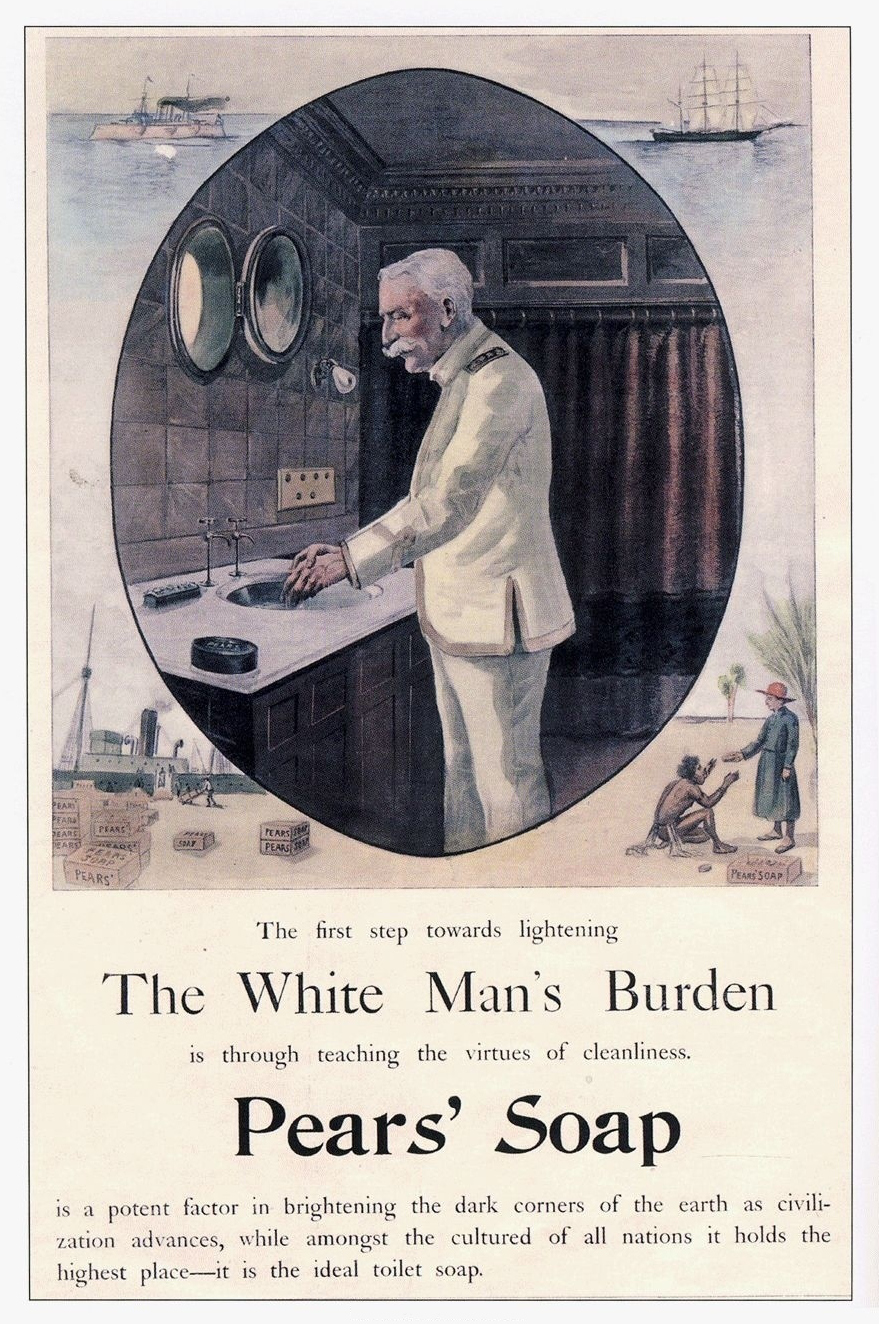
Hi everyone,
I am home sick and more than likely will be home for awhile. I had a terrible stomach virus over the weekend and somehow it has settled into my lungs, causing a terrible cough. Since I am pregnant, no meds, just rest and recovery---AWESOME.
That being said WE CAN NOT LOSE ground in our curriculum. Today you started my favorite topic--IMPERIALISM. Today, you read about the motives for imperialism and I SURE hope you were more specific than just stating economic, social, and political. You should have identified the need for natural resources, new markets, and the desire to spread Christianity, to name a few.
Take a look at the 1899 advertisement for Pear soap. Examine the picture and answer the foll- owing question. YOU MUST EMAIL ME YOUR ANSWER BY MIDNIGHT! My email is esepar@bellmore-merrick.k12.ny.us This is a homework assignment worth 15 pts.
How does this advertisement support the idea of imperialism? Look at the writing and the corner pictures for clues.
Don't forget to read Elana's post as well. Check the blog every day this week!
Tuesday, January 26, 2010
Brandon said 1/25...
Today we started off by taking out the homework, which I did not do...then Ms. Separ gave us a hand out that we were not allowed to write on. The hand out was composed of 7 scenes and a epilog about European nation's economic status before the revolution and after the revolution. Before we started the scene acting, Ms. Separ yelled at Alex again for sleeping during class. After all the commotion, Ms. Separ finally assigned people to roles in the scenes, after the scenes were done we briefly went over them. For example the nations before the revolution mainly focused on gold and silver from the colonies, which made them extremely dependent on these colonies, and forced them to expand and create more thus starting Mercantilism. Some nations wanted to become self sufficient by making citizens only buy stuff within the nation. Then we started the economic systems after the revolution, which will see drastic changes. During this time the enlighenment was wide spread, which made Capitalism popular and created Laissez Faire(hands off theory). Some names that should be remembered is Adam Smith who was a enlightenment thinker and was the father of Capitalism, also Karl Marx who disagreed with Capitalism and created Marxism which was highly popular amongst the working class. But eventually Marxism turns into Communism which seems good with all the equality but is later on taken advantage of from the upcoming leaders. We ended the day after going over the epilog and we have no homework! =
Elana is next to post
Elana is next to post
Sunday, January 24, 2010
Rachel said 1/22...
In class today (Friday, January 22nd) we discussed three major aspects as the Industrialization. The first was the was the working and living conditions the workers endured. Firstly, the factories began to dominate the slums of the cities and poor housing and tenement homes surrounded them. The factories gave way to air and water population (since the factories needed to be station on the rivers to fuel them.) These factories had cramped quarters and terrible conditions which sometimes resulted in injuries, and the factory owners would not compensate you with money if you did get harmed. During this time, women began to leave their role as a domestic worker in the home where they cared for the household and children. The factories hired the women because they were only required to pay them half as much as they would pay men. Both the husband and wife being at work instead of home hurt the family structure drastically. However, if the workers tried to fight against the conditions and the low wages they would just be replaced with other willing workers. The workers were not willing to lose pay entirely so they kept the jobs anyways. The next topic was the effects of the revolution outside Great Britain and the West. There were major increases in energy and technology over a 15-20 year time period. World trade drastically increased as new means on communication and travel developed. The economy increased in the industrialized nations as they exported manufactured goods to non industrialized nations to make a profit. This is why Great Britain eventually takes over India in order to obtain their cotton and other natural resources. By doing so, they don't have to pay money to import the cotton and they're able to make a larger profit when they sell it in a manufactured form. Eventually, the Britain government wants to establish railroad systems in India in order to further the transportation of cotton and other goods. Around the 1870's, the governments of Great Britain and Germany begin to give more rights to their workers by establishing set wages and allowing unions to form. The unions pressured the government to clean up the cities and make them more safe.
We also went back and looked at the drawing we created and focused in on the Enclosure Movement. In this act, all the land was required to be enclosed. This didn't allow for poor farmers to use the Commons, an area of farm land divided off for the poor farmers so they could make a living and support their families. The poor farmers, and even some middle class farmers with unenclosed land, were unable to keep up with the wealthy landowners production. Since they were rich, these landowners could afford new machinery that was used to make farm production easier and faster. This increase in production put the other farmers out of business. The new farming techniques helped to speed up industrialization.
...next up, Hsiesh.
We also went back and looked at the drawing we created and focused in on the Enclosure Movement. In this act, all the land was required to be enclosed. This didn't allow for poor farmers to use the Commons, an area of farm land divided off for the poor farmers so they could make a living and support their families. The poor farmers, and even some middle class farmers with unenclosed land, were unable to keep up with the wealthy landowners production. Since they were rich, these landowners could afford new machinery that was used to make farm production easier and faster. This increase in production put the other farmers out of business. The new farming techniques helped to speed up industrialization.
...next up, Hsiesh.
Thursday, January 21, 2010
Jut said 1/19...
So first off...today we got markers and white boards...YAY! Well on to the history part. we talked about the Monroe Doctrine. It was written in 1823 and it was about keeping the estern hemisphere closed to colonization. The basically tell Europe to back the hell off. But it really wasnt a big deal. It was like,(and I loved this analogy), a whimpy four year old kid flexing his noodle like arms. :) Also Britain was no longer intrested in the west. To them the west was like ehhhh but the east like India and Africa was pure gold.
Well i'm gunna jump around a lot but Britain wanted to ally themselves with America to protect South america so Britain could keep trading, leaving Spain out in the cold. But America didn't want to do that because it would interfere with expansion and America would somehow "owe" britain (and on a small note monroe was originally for this allience but John QUINCY Adams was like hell no.). America didn't need this alliance because if Spain ever tried to recolonize Britain would still fight. It would be like an instinct to protect their trade and power. The doctrine was also about the US remaining neutral unless their freedoms were threatened. Then we looked at some political cartoons which were pretty self explainitory. That's my review of the day! the next victim...err...i mean...person to go is.....Rachel. :) (Best of luck)
Well i'm gunna jump around a lot but Britain wanted to ally themselves with America to protect South america so Britain could keep trading, leaving Spain out in the cold. But America didn't want to do that because it would interfere with expansion and America would somehow "owe" britain (and on a small note monroe was originally for this allience but John QUINCY Adams was like hell no.). America didn't need this alliance because if Spain ever tried to recolonize Britain would still fight. It would be like an instinct to protect their trade and power. The doctrine was also about the US remaining neutral unless their freedoms were threatened. Then we looked at some political cartoons which were pretty self explainitory. That's my review of the day! the next victim...err...i mean...person to go is.....Rachel. :) (Best of luck)
Tuesday, January 19, 2010
Homework 1/19/10
Tonight's homework 1/19/10
1. Google Modern History Sourcebook
2. Click on first link
3. Once on the webpage go to left-hand side and click Industrial Revolution.
4. Scroll down to social and political effects
5. Read Women Miners in English coal pits
6. Read Lowell Mill Girls
****Write a summary for each reading. What insights does it give us to the Industrial Revolution.
1. Google Modern History Sourcebook
2. Click on first link
3. Once on the webpage go to left-hand side and click Industrial Revolution.
4. Scroll down to social and political effects
5. Read Women Miners in English coal pits
6. Read Lowell Mill Girls
****Write a summary for each reading. What insights does it give us to the Industrial Revolution.
Saturday, January 16, 2010
Eliner said 1/15...
Today in class, we focused mostly on Mexico and South America. The majority in South America are Portuguese and Spanish. We briefly went over the social hiearchy, emphasizing the fact that the peninsulares, those who are born in Spain that moved to the New World, have most of the social, political and economic power. The creoles are upset since they are as educated and as rich as the peninsulares, but don’t have as much political power since creoles are born in the New World. Simon Bolivar, a creole, strongly believes that this is unfair and is angry at the Spanish for treating the people in South America badly and for taking their money. His main goal is to help the people and free South America from Spain. So he decides to take action while Napoleon is revolting against France and conquering Europe since the government would be weakened. Bolivar organizes a meeting to discuss his plan to liberate South America. Keep in mind that the Spanish would never expect Bolivar to rebel because he’s already wealthy, however the Spanish think the natives (peasants) will rebel. Bolivar liberates Venezuela, Colombia, Ecuador, Bolivia, Panama, and Peru after a long period of conquest. A creole named San Martin helps liberate Argentina as well as another creole named O’Higgins who helped liberate Chile. When Bolivar gets back to Spain, he decides to meet with the leaders of the liberated nations and tells them he wants to unify them and form the Grand Colombia, all of South America. He tries convincing them to give up their power to unify, but all of them don’t want to. Since the countries aren’t cooperating and are consistently arguing against Bolivar’s plan, he is devastated and leaves South America, returning to Europe.
Before the period ended, we reviewed two worksheets. One was about Bolivar’s message to the Congress of Angostura (the creoles) saying how unfair it is that the creoles are being ruled by peninsulares. He pretty much bad-mouths about Spain and ends it by talking about democracy in North America. The document shows that Bolivar wants enlightenment to the creoles. Now the second sheet – on the front was about Mexico and a revolt lead by Father Hidalgo, a mestizo. Father Hidalgo wants an enlightenment government and wants independence from Spain, as well as equality. The back illustrates parts of the Mexican Constitution of 1824 which was after Father Hildago is dead (dies in 1814). The difference about Mexico is that the revolution is by the people and for the people unlike the revolution in South America. Lastly, Ms. Separ gave us a series of events that came before this constitution. In 1820, they gained their independence. 1821, Mexico was appointed an emperor who was miserable. 1822, Mexico established a republic that was controlled by the creoles.
The homework is the Monroe Doctrine packet and the comparative essay. Sorry for the long blog, guys! The next person to blog will be Jut.
Before the period ended, we reviewed two worksheets. One was about Bolivar’s message to the Congress of Angostura (the creoles) saying how unfair it is that the creoles are being ruled by peninsulares. He pretty much bad-mouths about Spain and ends it by talking about democracy in North America. The document shows that Bolivar wants enlightenment to the creoles. Now the second sheet – on the front was about Mexico and a revolt lead by Father Hidalgo, a mestizo. Father Hidalgo wants an enlightenment government and wants independence from Spain, as well as equality. The back illustrates parts of the Mexican Constitution of 1824 which was after Father Hildago is dead (dies in 1814). The difference about Mexico is that the revolution is by the people and for the people unlike the revolution in South America. Lastly, Ms. Separ gave us a series of events that came before this constitution. In 1820, they gained their independence. 1821, Mexico was appointed an emperor who was miserable. 1822, Mexico established a republic that was controlled by the creoles.
The homework is the Monroe Doctrine packet and the comparative essay. Sorry for the long blog, guys! The next person to blog will be Jut.
Wednesday, January 13, 2010
Nick P said 1/13...
In today's class we talked about the revolution of Haiti. Haiti's social classes were made up of black slaves, mulattos (mixed heritage), freed blacks, poor whites, and rich landowning whites. because Haiti was a colony of France, Hati could trade with no country other than France. In 1789, France has their revolution. Whites, especialy rich landowning ones, suport the revolution because changes in france could alow for the rich haitians to trade with other nations. However the new French constitution did not pertain to the colonies. The lower classes, made up of blacks mostly, wanted to abolish slavery. In 1793 an educated freed slave named Toussaint L'Ouverture led the black population to abolish slavery. By 1799, while the French where busy with their own political turmoil, Toussaint L'Ouverture had taken power as the millitary dictator. By 1800, Napoleon has taken power in France. He is worried that Haiti wants independance. Despite fighting major wars in Europe with Great Britain, Prussia and Russia, Napoleon decides to send troops into Haiti to put down any potential revolution. Keep in mind all Haiti wanted was to abolish slavery. Toussaint L'Ouverture is arrested and sent as a prisoner to France (where he died), and the Haitians go bananas. The Haitians fight the French soldiers. They fight rough, and with the help of Frances enemy Great Britain, Haiti is able to gain independance and issue a constitution around 1803 or 1804. Their constitution holds true to enlightnment ideas remarkably well. The govornment of Haiti was a democracy for about 20 years, before sliping into the state of turmoil that still exists today in Haiti.
the next up will be Elener, send my regards to the twins.
the next up will be Elener, send my regards to the twins.
Monday, January 11, 2010
Michelle said 1/11...
We started off the class discussing Napoleon, and the large empire he set up for himself, which brought unity and stability to France.
Napoleon divorces his wife Josephine and marries the daughter of the Austrian king. This allows France to become allies with Austria. With France expanding, Great Britain still remains the biggest threat to France. Napoleon wants to hurt Great Britain but he knows there is no way he can defeat them through war, so he makes an attempt to hurt Great Britain economically. Through these efforts Napoleon developed a continental system. This was a policy that says all nations in Europe are not allowed to trade with Great Britain. Keep in mind that Great Britain was at the height of its industrial revolution and most civilizations desire to trade with it. It turns out, Napoleon end up cancelling this policy and goes for Russia. 1812, Napoleon take 400,000 troops from Paris ad go across Austria to attack Russia. Russia is not modernized yet, and knew that they did not have the proper weaponry to defeat France. France ends up entering Russia, dressed in summer cloths, with the idea that they would get in and out of Russia, as champions, within 6 weeks. To their surprise, Russia had already destroyed their towns with nothing for France to take. This technique the Russians used is known as the scorched earth policy. After 6 months, Napoleon has no choice but to retreat with 7,000 soldiers back to France. This was a devastating loss for Napoleon, and the army was very difficult to rebuild.
After discussing the loss in Russia we went over a chain of events that occurred in France. First Napoleon returns back to France as a big loser in 1812. By now, the revolution in France is over. France is now battling Prussia, Russia, and Great Britain. April of 1814, after a major downfall in France, Napoleon steps down from power, leaving Louis XVIII to fill in as the new leader of France. Napoleon then tried to flee to Austria with his wife and son, but was stopped and sent to Elba, an island right next to southern France. With Frances support, Napoleon was able to sail back to France, train his army, and overthrow Louis XVIII. He was in control for 100 days, when Great Britain and Prussia send their forces into France. They fight the battle of Waterloo where Napoleon is defeated for the last time. Napoleon is sent to St. Helena with nobody on the island but his cook and doctor.
In class we also discussed Napoleons code, which he will consider his best accomplishment. He took all 14,000 laws that were in France before he came to power, and combines them into 50 laws. These laws appealed to the natural rights of men, but still had it’s weak points towards women.
At the end of class we briefly discussed the congress of Vienna, which consisted of Austria, Prussia, Russia, Great Britain, and France. They all gathered to decide what to do with France now that Napoleon was out of the picture. They felt that punishing France would be the wrong decision because France may revolt, but instead they wanted to “push the clock back” and bring France back to it’s old ways.
For homework we were assigned a quick worksheet, and our DBQ projects are due tomorrow. The next person to blog will be Nick P.
Napoleon divorces his wife Josephine and marries the daughter of the Austrian king. This allows France to become allies with Austria. With France expanding, Great Britain still remains the biggest threat to France. Napoleon wants to hurt Great Britain but he knows there is no way he can defeat them through war, so he makes an attempt to hurt Great Britain economically. Through these efforts Napoleon developed a continental system. This was a policy that says all nations in Europe are not allowed to trade with Great Britain. Keep in mind that Great Britain was at the height of its industrial revolution and most civilizations desire to trade with it. It turns out, Napoleon end up cancelling this policy and goes for Russia. 1812, Napoleon take 400,000 troops from Paris ad go across Austria to attack Russia. Russia is not modernized yet, and knew that they did not have the proper weaponry to defeat France. France ends up entering Russia, dressed in summer cloths, with the idea that they would get in and out of Russia, as champions, within 6 weeks. To their surprise, Russia had already destroyed their towns with nothing for France to take. This technique the Russians used is known as the scorched earth policy. After 6 months, Napoleon has no choice but to retreat with 7,000 soldiers back to France. This was a devastating loss for Napoleon, and the army was very difficult to rebuild.
After discussing the loss in Russia we went over a chain of events that occurred in France. First Napoleon returns back to France as a big loser in 1812. By now, the revolution in France is over. France is now battling Prussia, Russia, and Great Britain. April of 1814, after a major downfall in France, Napoleon steps down from power, leaving Louis XVIII to fill in as the new leader of France. Napoleon then tried to flee to Austria with his wife and son, but was stopped and sent to Elba, an island right next to southern France. With Frances support, Napoleon was able to sail back to France, train his army, and overthrow Louis XVIII. He was in control for 100 days, when Great Britain and Prussia send their forces into France. They fight the battle of Waterloo where Napoleon is defeated for the last time. Napoleon is sent to St. Helena with nobody on the island but his cook and doctor.
In class we also discussed Napoleons code, which he will consider his best accomplishment. He took all 14,000 laws that were in France before he came to power, and combines them into 50 laws. These laws appealed to the natural rights of men, but still had it’s weak points towards women.
At the end of class we briefly discussed the congress of Vienna, which consisted of Austria, Prussia, Russia, Great Britain, and France. They all gathered to decide what to do with France now that Napoleon was out of the picture. They felt that punishing France would be the wrong decision because France may revolt, but instead they wanted to “push the clock back” and bring France back to it’s old ways.
For homework we were assigned a quick worksheet, and our DBQ projects are due tomorrow. The next person to blog will be Nick P.
Sunday, January 10, 2010
Matt said 1/8
In social studies world history AP class yesterday, we all learned about The Directory, the war with Prussia and Austria, and Napoleon Bonaparte.
The Directory was the government that followed Robespierre's Republic, which unfortunately turned into a dictatorship. The Directory was made up of 5 consuls(unsure of spelling?), each who has equal power to the next. The reason it's made up of 5 people is so each person could check the next so not one becomes to powerful, and to make decisions and come to agreements on ideas to benefit France. The only problem is that the consuls would take bribes, they couldn't agree with one another, and they were constantly fighting for power.
As for the war between France and its neighboring absolute countries, it was a battle that took place all throughout Europe, N. Africa, and in some parts of the middle east. Robespierre was the one who started this whole mess, declaring war before he was executed. The greatest general, who won many battles, and killed many enemies, was ol' Napoleon Bonaparte.
Napoleon Bonaparte was very pompous and full of himself. Another fun fact is that Napoleon was the first ruler to not be called by his last name, because, well say Bonaparte 5 times fast, and you'll understand what i mean. Every decision he made was to gain popularity and fame, even though some of those decisions helped France. Napoleon went to Egypt in 1798, stole some things like mummies and raided some tombs, but he ALSO discovered the Rosetta Stone, a stone that was used to translate other reservations. He returned to France in 1799, and all the citizens praised him and were in love with him. The citizens told Napoleon that their government was in shambles and had to go. So he marched into the capital building and told the Directory leader that he will become the leader of the directory, and of the consuls. Even though he became ruler, he was still a general in the war. During his reign as leader, he had many portraits drawn for him, and by the most influential artist of that time period Geen'Jaas David, (painted the Tennis Court Oath picture). In 1802, a new constitution was added, and Napolean was named Consul for life. In 1804 he was declared emperor of France. When he was declared Emperor (all catholic emperors are crowned by Pope), he made the Pope come to France in Notre Dame Cathedral. But on that day, instead of the Pope allowing him to put the crown on his head, he takes it out of the Popes hands, places it on his own head, basically declaring he is stronger than the church, and it is NOT part of the government anymore, Napoleon has such guts doing that to the most powerful man in the world. While emperor, he conquers Italy, some German states, and Spain.
THE NEXT BLOGGER WILL BE...michelle
The Directory was the government that followed Robespierre's Republic, which unfortunately turned into a dictatorship. The Directory was made up of 5 consuls(unsure of spelling?), each who has equal power to the next. The reason it's made up of 5 people is so each person could check the next so not one becomes to powerful, and to make decisions and come to agreements on ideas to benefit France. The only problem is that the consuls would take bribes, they couldn't agree with one another, and they were constantly fighting for power.
As for the war between France and its neighboring absolute countries, it was a battle that took place all throughout Europe, N. Africa, and in some parts of the middle east. Robespierre was the one who started this whole mess, declaring war before he was executed. The greatest general, who won many battles, and killed many enemies, was ol' Napoleon Bonaparte.
Napoleon Bonaparte was very pompous and full of himself. Another fun fact is that Napoleon was the first ruler to not be called by his last name, because, well say Bonaparte 5 times fast, and you'll understand what i mean. Every decision he made was to gain popularity and fame, even though some of those decisions helped France. Napoleon went to Egypt in 1798, stole some things like mummies and raided some tombs, but he ALSO discovered the Rosetta Stone, a stone that was used to translate other reservations. He returned to France in 1799, and all the citizens praised him and were in love with him. The citizens told Napoleon that their government was in shambles and had to go. So he marched into the capital building and told the Directory leader that he will become the leader of the directory, and of the consuls. Even though he became ruler, he was still a general in the war. During his reign as leader, he had many portraits drawn for him, and by the most influential artist of that time period Geen'Jaas David, (painted the Tennis Court Oath picture). In 1802, a new constitution was added, and Napolean was named Consul for life. In 1804 he was declared emperor of France. When he was declared Emperor (all catholic emperors are crowned by Pope), he made the Pope come to France in Notre Dame Cathedral. But on that day, instead of the Pope allowing him to put the crown on his head, he takes it out of the Popes hands, places it on his own head, basically declaring he is stronger than the church, and it is NOT part of the government anymore, Napoleon has such guts doing that to the most powerful man in the world. While emperor, he conquers Italy, some German states, and Spain.
THE NEXT BLOGGER WILL BE...michelle
Friday, January 8, 2010
Grace said 1/7
Unfortunately, Ms Separ was not in class to inspire our young minds today. However, by reading five documents, we were (hopefully) able to understand these readings and answer the questions about the Reign of Terror.
Reading #1 describes the acts King Louis XVI committed that led him to his trial. These include: preventing representatives from attending the Estates-General, using troops against citizens, trying to flee the country for his own benefit, signing a constitution that he didn’t follow, and refusing to sign any other documents to limit his power. Reading #1 also mentions the French term “émigrés,” which is someone who fled the Revolution and then lived in a foreign nation.
Reading #2 is written by a radical political leader named Camille Desmoulins, who expressed his opinion on Maximilien Robespierre’s ways of establishing a republic. Desmoulins basically said that the reasons why so many people were executed or arrested are foolish and are definitely not a threat to the republic. Camille Desmoulins mocked the fact that innocent acts caused severe punishments, and he was then later blamed for “ruining the Republic” himself, which just proves his point.
Reading #3 is the speech that Robespierre gave to gain support for the Revolution and the establishment of a republic. He claimed that the goal of the Revolution is to provide liberty, equality, eternal justice, and laws that everyone can agree with. These ideas coincide with Enlightenment values.
Reading #4 lists the laws enforced by Robespierre that lay out his definition of tyranny and punishment. All people that possess anything resembling monarchs or absolutism faced punishment. “Enemies of liberty” were those who speak or write of ideas that oppose the Republic. People who didn’t participate in the Revolution were also considered “enemies of liberty.”
Reading #5 provides information about the execution of Robespierre. At first, Robespierre was seen as an “idol” for his radical ideas of completely removing the king. Then again, it seems that anyone that supported rights for the majority of the population were well-liked. Eventually, after executions of people without any investigating, Robespierre was guillotined just like what happened to his victims.
I apologize for the long blog; Summarization of each document was necessary in my opinion. Matt P., you better be ready to write the next blog!
Reading #1 describes the acts King Louis XVI committed that led him to his trial. These include: preventing representatives from attending the Estates-General, using troops against citizens, trying to flee the country for his own benefit, signing a constitution that he didn’t follow, and refusing to sign any other documents to limit his power. Reading #1 also mentions the French term “émigrés,” which is someone who fled the Revolution and then lived in a foreign nation.
Reading #2 is written by a radical political leader named Camille Desmoulins, who expressed his opinion on Maximilien Robespierre’s ways of establishing a republic. Desmoulins basically said that the reasons why so many people were executed or arrested are foolish and are definitely not a threat to the republic. Camille Desmoulins mocked the fact that innocent acts caused severe punishments, and he was then later blamed for “ruining the Republic” himself, which just proves his point.
Reading #3 is the speech that Robespierre gave to gain support for the Revolution and the establishment of a republic. He claimed that the goal of the Revolution is to provide liberty, equality, eternal justice, and laws that everyone can agree with. These ideas coincide with Enlightenment values.
Reading #4 lists the laws enforced by Robespierre that lay out his definition of tyranny and punishment. All people that possess anything resembling monarchs or absolutism faced punishment. “Enemies of liberty” were those who speak or write of ideas that oppose the Republic. People who didn’t participate in the Revolution were also considered “enemies of liberty.”
Reading #5 provides information about the execution of Robespierre. At first, Robespierre was seen as an “idol” for his radical ideas of completely removing the king. Then again, it seems that anyone that supported rights for the majority of the population were well-liked. Eventually, after executions of people without any investigating, Robespierre was guillotined just like what happened to his victims.
I apologize for the long blog; Summarization of each document was necessary in my opinion. Matt P., you better be ready to write the next blog!
Sam S said 1/6
To start off the class this Wednesday, Mrs. Separ gave us the quiz she had told us about previously. It consisted of three pictures that we had to give a description for, two straight from the notes the day before. The first was the invasion of the Bastille, where frustrated peasants attacked the prison and released seven prisoners, and killed both the governor and guards. The second picture represented the Tennis Court Oath, the 3rd estate pledged they wouldn’t give in until a constitution for their rights was created and named themselves the National Assembly. The last picture was a cartoon of French king, frankly, riding on the back of a lower-classmen, or peasant. It showed how he was wearing out the 3rd estate and ignoring their requested constitution.
After turning in our quizzes, Mrs. Separ stressed that we, if not, had to be taking our upcoming projects more seriously, and coming into extra help with our progressing work, she is worried (mad).
We then went on to take more notes with the packet we had gotten on Tuesday. We focused on France’s changing government. In the Legislative Assembly was the parliament, which was divided into three groups, the left wing, the right wing and the center. These titles were solely based on where the groups sat. The right wing did not favor change in the government and heavily supported the king, while on the other hand, the left wing, opposed the king and desired change. The center did not have an extreme opinion on either, neither opposing nor favoring fully. The leader of the ‘radical’ group, the left wing, was Robespierre. He brought the idea of a republic, without a King, and was eventually put into power as more agreed with his opinion. Robespierre gained more and more power, becoming crazier with it and paranoid. He had a police force that patrolled France searching for those with ideas of absolutism. This group was called the “Committee of Public Safety”. ANY trace of monarchy in one’s speech or home would have them thrown in jail. Under Robespierre’s rule from 1793-1794, the “reign of terror”, 40,000 would be executed and 300,000 were arrested. One of the last executions being Louis XIV and his family.
The next to post will be from Grace.
After turning in our quizzes, Mrs. Separ stressed that we, if not, had to be taking our upcoming projects more seriously, and coming into extra help with our progressing work, she is worried (mad).
We then went on to take more notes with the packet we had gotten on Tuesday. We focused on France’s changing government. In the Legislative Assembly was the parliament, which was divided into three groups, the left wing, the right wing and the center. These titles were solely based on where the groups sat. The right wing did not favor change in the government and heavily supported the king, while on the other hand, the left wing, opposed the king and desired change. The center did not have an extreme opinion on either, neither opposing nor favoring fully. The leader of the ‘radical’ group, the left wing, was Robespierre. He brought the idea of a republic, without a King, and was eventually put into power as more agreed with his opinion. Robespierre gained more and more power, becoming crazier with it and paranoid. He had a police force that patrolled France searching for those with ideas of absolutism. This group was called the “Committee of Public Safety”. ANY trace of monarchy in one’s speech or home would have them thrown in jail. Under Robespierre’s rule from 1793-1794, the “reign of terror”, 40,000 would be executed and 300,000 were arrested. One of the last executions being Louis XIV and his family.
The next to post will be from Grace.
Wednesday, January 6, 2010
Alex M said...1/5/10
In class Nick Protan told us about an article of getting pregnant which was really funny and weird. After that the class reviewed the information about the french revolution and reasons why it accord from the previous day. We also continued the rest of the notes on the french revolution and we saw images about the underlying causes of the french revolution and took a lot of notes on it. We learned about the tennis court oath and why they had to meet on the indoor tennis courts, we also learned about what angered the peasants and lead them to rebel for example even after King louis agreed to sign the declaration stating he would lower the taxes and be fairer to the people he still wasn't. This eventually lead to event like the storming of the bastille which was when peasants took over a prison freed the seven slaves and killed all the guards and took the mayors head off this represented that the peasants were tired of this unfairness and were going to rebel also another event was the march of vasille and this was when women gathered together on a Sunday and marched to vasille wanting to speak with the queen and beg her for bread so they could feed their starving children. After we finished the notes for the day Mrs. Spear informed us about the quiz that we will be having tomorrow.
Next to post is Sam S
Next to post is Sam S
Subscribe to:
Comments (Atom)